

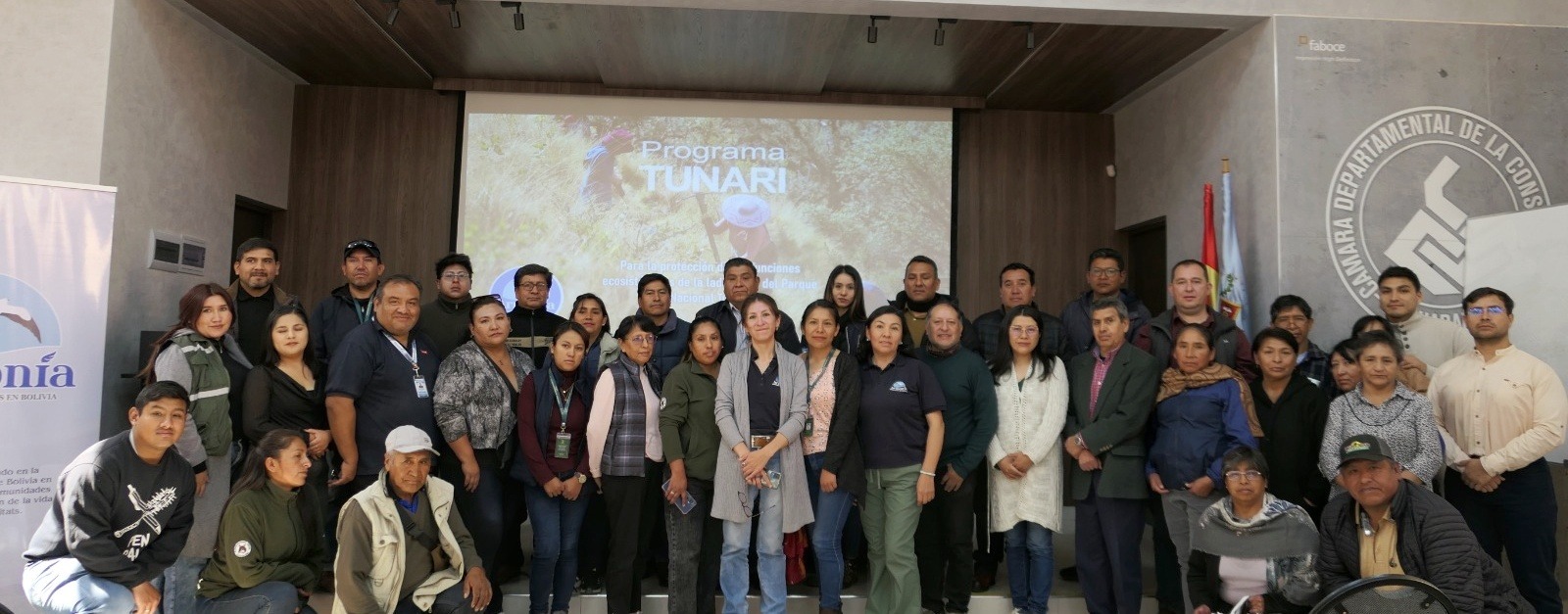
The second workshop organized by the Tunari Program brought together authorities, technical staff, and social representatives to strengthen understanding of institutional competencies, territorial planning, and interinstitutional coordination aimed at the comprehensive protection of the protected area.
As part of Asociación Armonía’s Tunari Program, the second Workshop on Strengthening Competencies and Intergovernmental Coordination for the Protection of Tunari National Park was held, bringing together technical representatives from municipal governments, the Departmental Autonomous Government, the National Service of Protected Areas (SERNAP), institutions involved in environmental management, and local stakeholders.
The workshop aimed to strengthen understanding of the responsibilities assigned to different levels of government and create conditions for more effective coordination among institutions responsible for planning, territorial management, and conservation of the protected area.
During the meeting, participants identified a lack of clarity regarding the scope, limits, and responsibilities of each institution as one of the main challenges. This situation can hinder decision-making, coordination, and responses to territorial and environmental issues affecting the park and surrounding municipalities.
Daniela Aguirre, coordinator of Asociación Armonía’s Tunari Program, presented the initiative’s background, objectives, methodology, activities, and results. She highlighted work on ecological restoration, protection of ecosystem functions, fire prevention, environmental governance, interinstitutional coordination, and strengthening of local stakeholders.
The State Service for Autonomies, meanwhile, gave a technical presentation on the autonomy framework applicable to national protected areas involving different territorial stakeholders. The presentation addressed the territorial, social, and institutional dimensions of responsibilities related to Tunari National Park, as well as mechanisms available for coordinating these responsibilities with autonomous territorial governments.
Topics discussed included territorial planning guidelines within the context of the park, current environmental regulations, institutional responsibilities and limits, and the possibility of establishing agreements, intergovernmental arrangements, and other legal coordination mechanisms to strengthen its protection.
The workshop also brought together representatives of neighborhood organizations, who expressed interest in gaining a better understanding of municipal and departmental responsibilities. This knowledge can strengthen grassroots participation and contribute to coordinated planning on issues related to buffer zones, park boundaries, and land-use planning in adjoining areas.
This second meeting is part of a process aimed at establishing methodological, technical, and institutional foundations that provide public stakeholders with tools to plan, coordinate, and act within the scope of their respective responsibilities.
The goal is to move toward territorial management that reconciles municipalities’ development needs with the conservation of Tunari National Park, recognizing that the challenges affecting the territory are shared and require joint solutions.
Protecting water resources, native forests, biodiversity, soils, and other ecosystem functions of Tunari requires institutional clarity, shared responsibility, and permanent coordination mechanisms.
In this context, the Tunari Program is also promoting the development of a sustainable financing mechanism to mobilize and coordinate resources for the conservation of the protected area. Its implementation will require the participation of public institutions, social stakeholders, the private sector, and partner organizations, while respecting the responsibilities and mandates of each sector.
Through these spaces, Asociación Armonía’s Tunari Program contributes to strengthening environmental governance and building a shared vision for the future of the protected area.
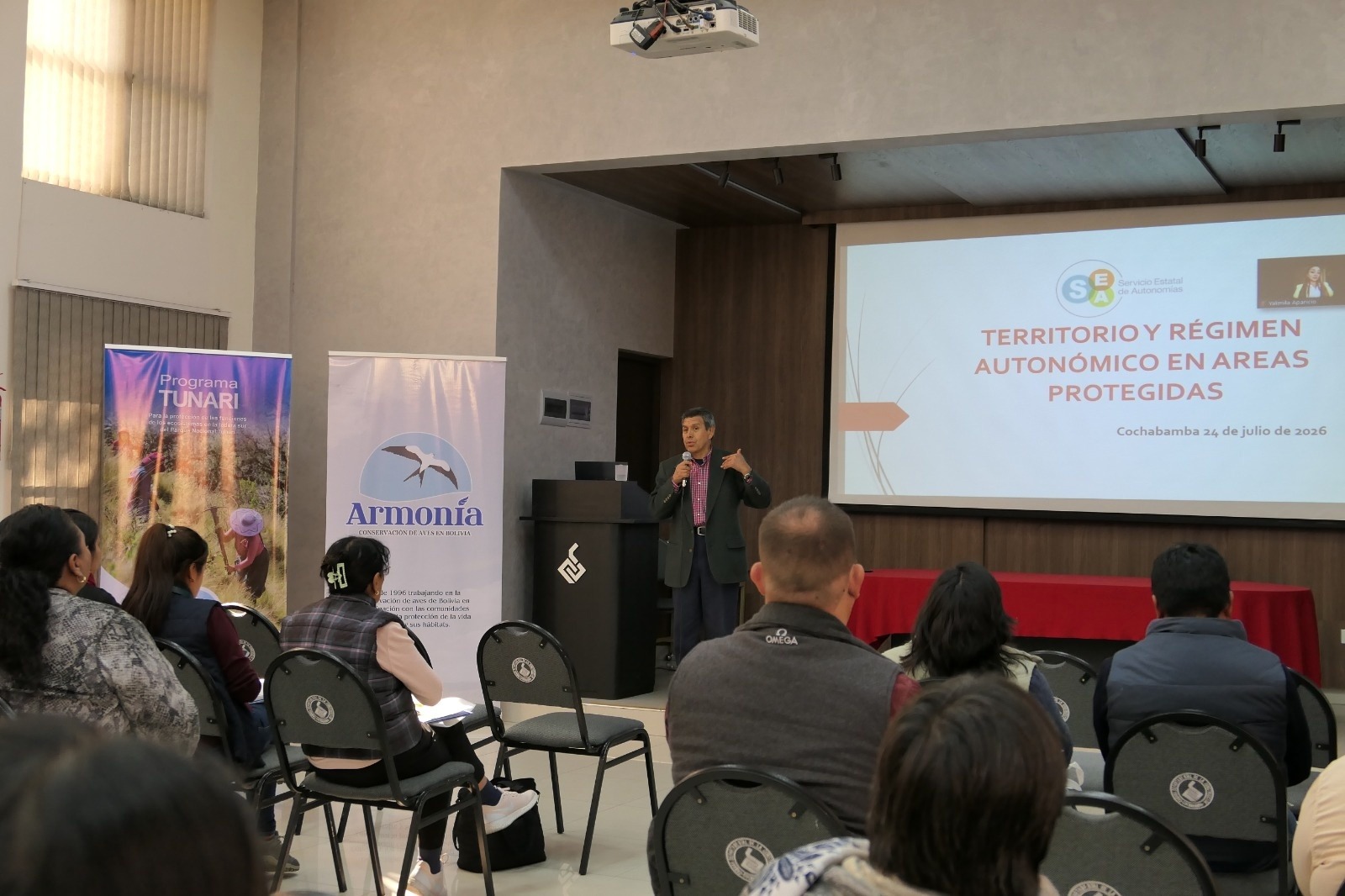
Protecting Tunari requires understanding our respective responsibilities, coordinating our actions, and assuming a shared responsibility for the territory that safeguards Cochabamba’s water and life.
Text: Daniela R. Gutierrez, Armonía.