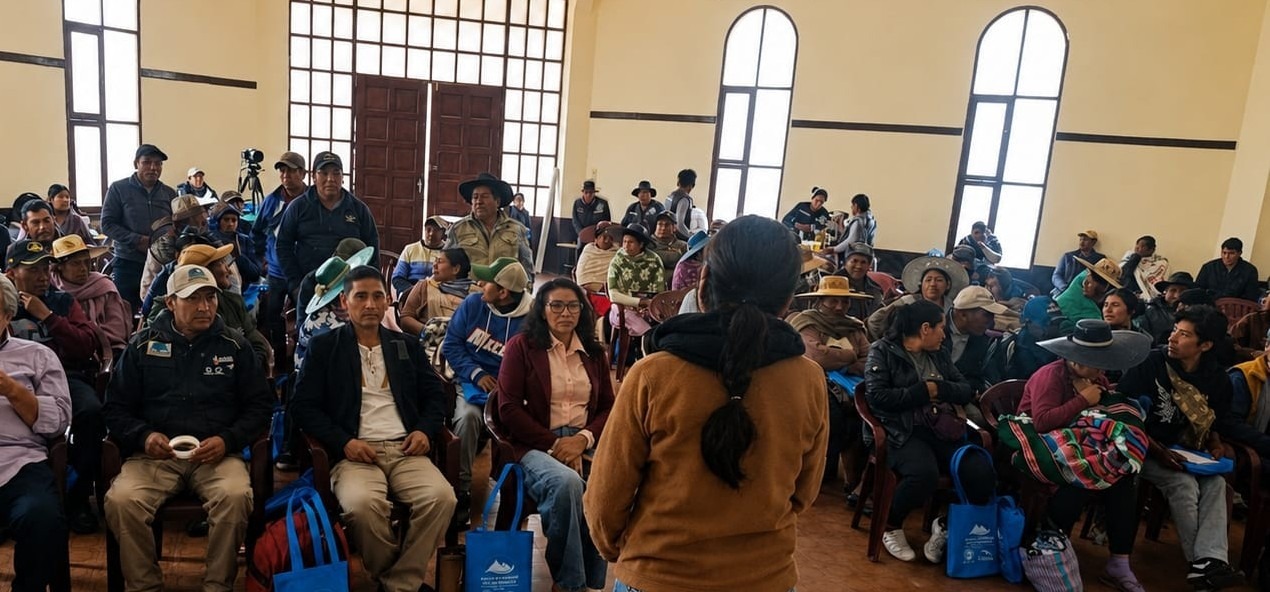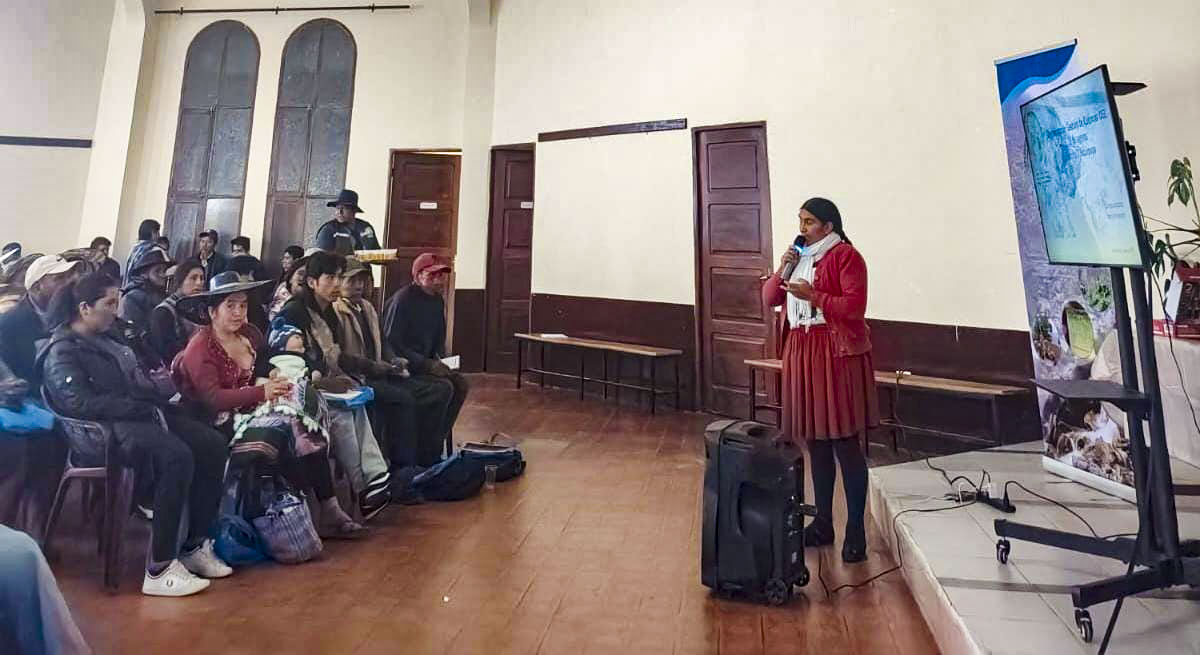
Representatives of 24 communities from Cochabamba and Chiquitanía participated in the “Dialogue of Knowledge for Watersheds: First Community Gathering between Valleys and Lowlands,” organized by Asociación Armonía, through its Tunari Program, and the 13 de Agosto Watershed Management Organization (OGC).
The gathering brought together community leaders, authorities, and representatives to share experiences on protecting water, forests, soils, and territories. Despite coming from different geographic contexts, the delegations agreed on a common need: to strengthen organized community spaces that enable them to plan, coordinate, and sustain comprehensive watershed management.
During the event, participants recognized that communities can strengthen the protection and sustainable use of water when they have Watershed Management Organizations, mechanisms that ensure continuity in their actions, and networks for collaboration among territories. Benjamín Vargas, a community leader from La Phia, described native-plant forests as “water factories” and emphasized the need to restore these species to protect water sources and the ecosystem as a whole.
Participants also connected the protection of forests and soils with organic production, family health, and sustainable development opportunities for their communities.
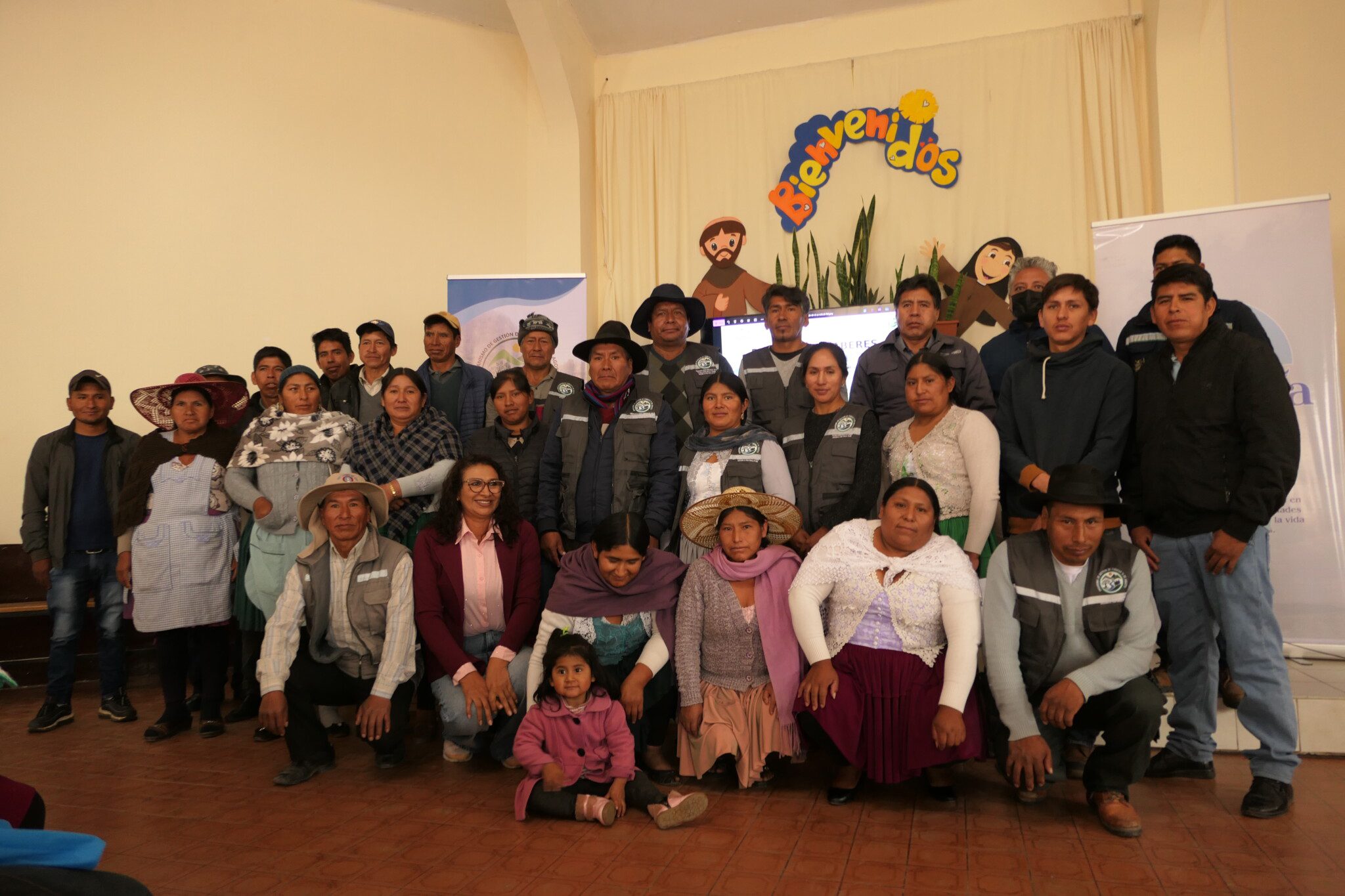
Representatives of communities from District 13 of Tiquipaya during the gathering.
Communities Organizing to Build Solutions
The dialogue allowed the delegations to express the need to establish, strengthen, and coordinate community organizations that can jointly protect watersheds and territories.
Community leaders noted that there are still challenges in ensuring that the entire population understands the importance of protecting watersheds. For this reason, they requested that Asociación Armonía continue supporting these processes of organization, training, restoration, and territorial planning. “These participatory spaces help us continue working because we are part of the solution and, together, we can build responses for our territories,” representatives of the communities agreed.
Daniela Aguirre, coordinator of Asociación Armonía’s Tunari Program, emphasized that building networks will help sustain the work already underway and connect experiences from different regions. “Despite the distances, we are all connected by water. Building networks allows us to continue coordinating and working from the territory with a vision of collaboration and unity,” Aguirre said.
Valleys and Lowlands Share a Common Purpose
Delegations from Chiquitanía shared lessons related to community organization, coordination with different levels of government, community-based tourism, protection of water sources, and conservation of their territories. They also highlighted the importance of community organizations having sustainable financing mechanisms that allow them to continue their conservation and territorial management efforts.
The visitors noted that the ecosystems, forests, rivers, and production systems of the lowlands differ from those of the Cochabamba valleys. However, the exchange allowed them to identify common challenges and gather lessons that can be adapted to each territory.
Rodrigo Soria, executive director of Asociación Armonía, noted that these gatherings help connect experiences developed in different contexts. “The lowlands and valleys face different geographic contexts, but they share the same goal: protecting their landscapes and water sources to secure the future of their communities. The commitment is to continue strengthening this coordination and joint work,” Soria said.
The gathering concluded with the challenge of continuing to build a collaborative network among Watershed Management Organizations in Cochabamba and Chiquitanía, capable of exchanging knowledge, supporting community processes, and promoting solutions from within the territories themselves.
The main conclusion of the gathering was that protecting a watershed does not depend solely on isolated environmental actions: it requires communities that are informed, organized, and connected to one another.
Water connects territories; community organization helps protect it.