

Armonía: 30 Years of Working to Conserve Bolivia’s Threatened Avifauna
Agosto 04, 2026 por Armonia
Before taking flight, Armonía was just an idea.
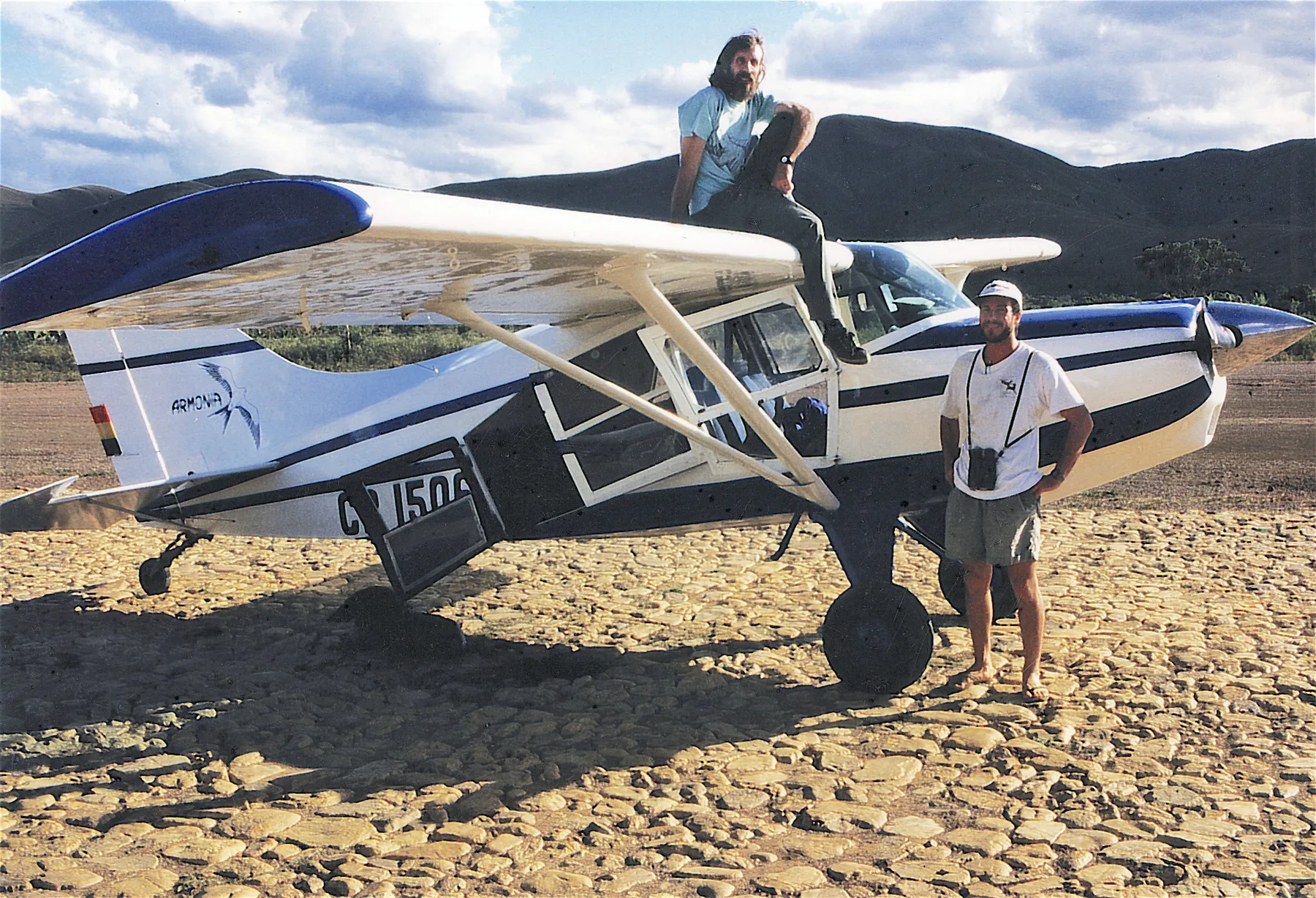
An idea conceived on the night of August 10, 1992, on an old airstrip perched on the Caparuch Plateau, south of Noel Kempff Mercado National Park. There, amid a landscape of lush forest islands and soils steeped in the scent of damp earth, stood Louis Jammes. He was 44 years old and already had a prolific career as a bush pilot. For decades, he had flown renowned scientists—including several researchers from Chicago’s Field Museum of Natural History—to some of the most remote corners of the Bolivian Amazon.
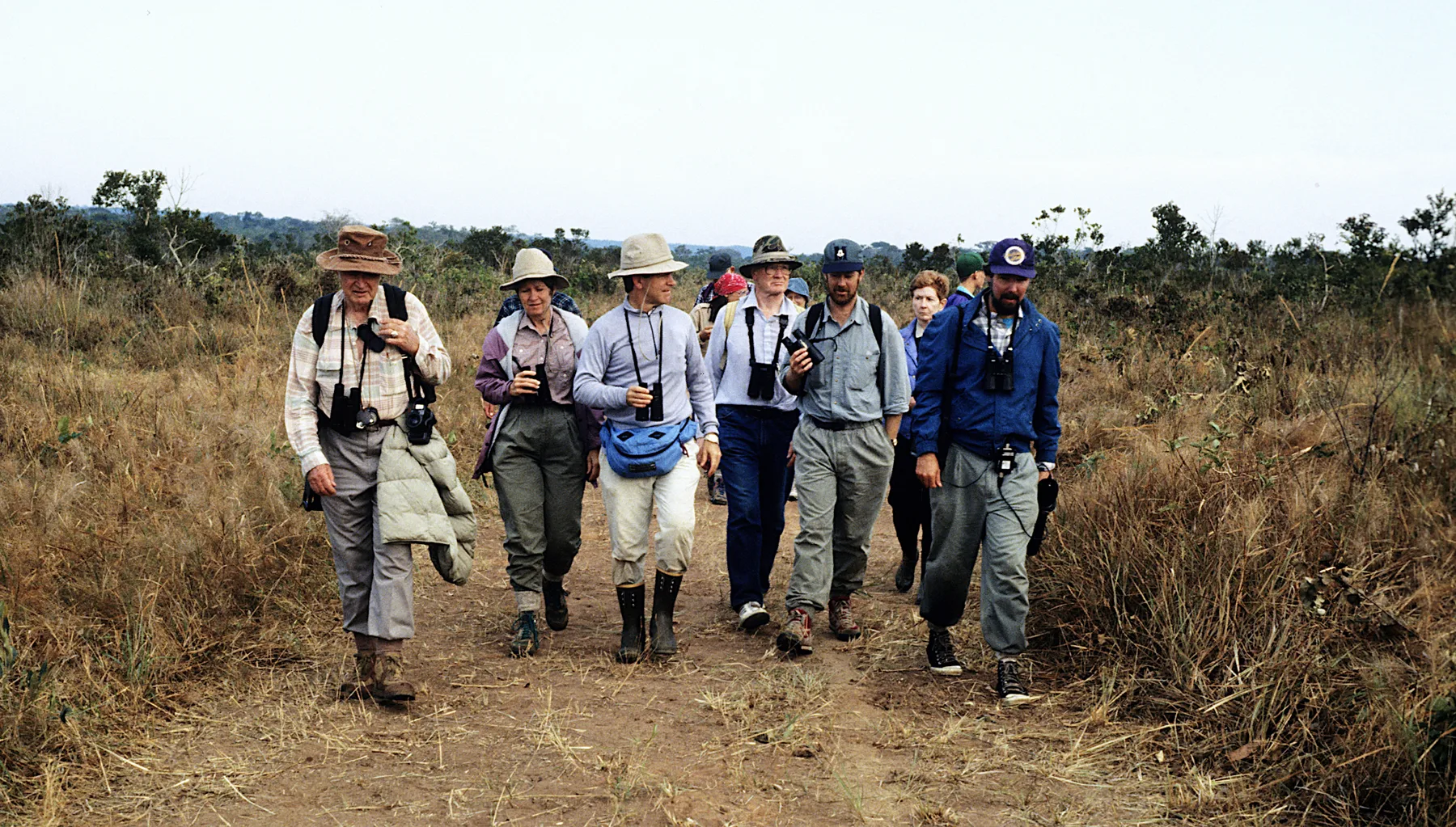
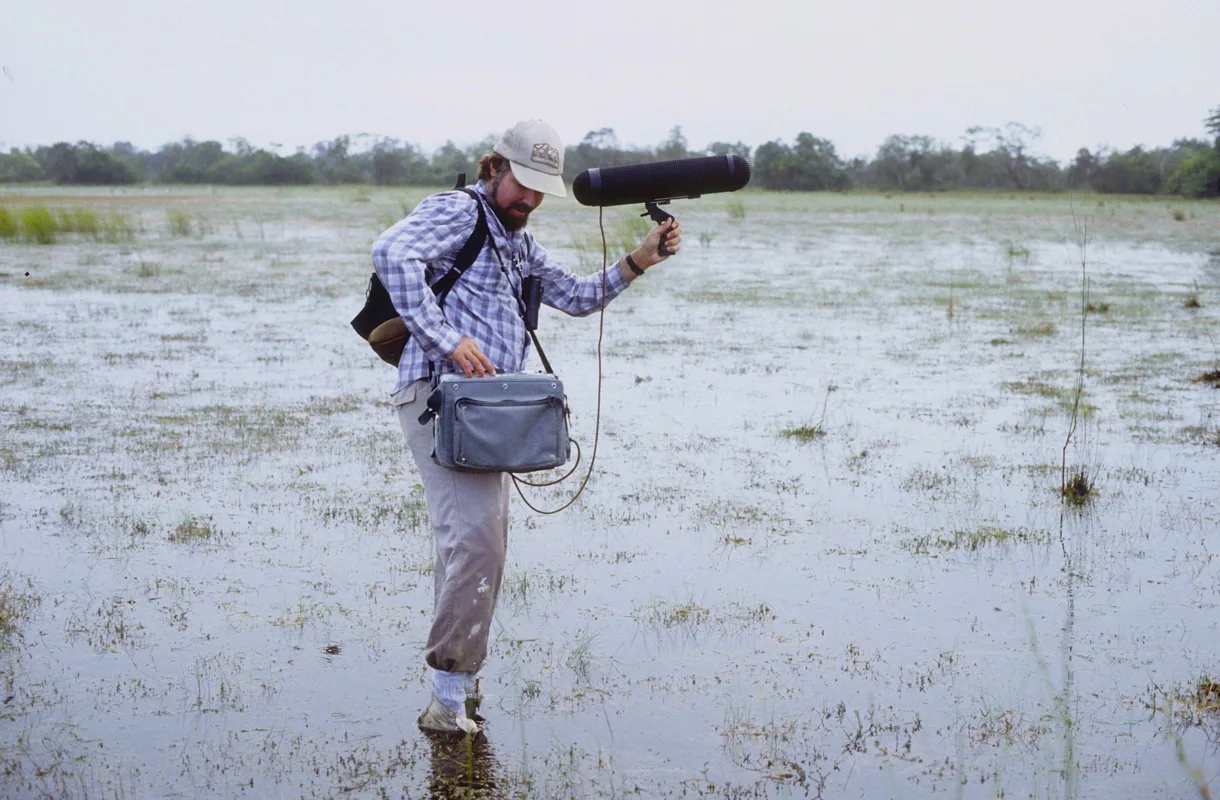
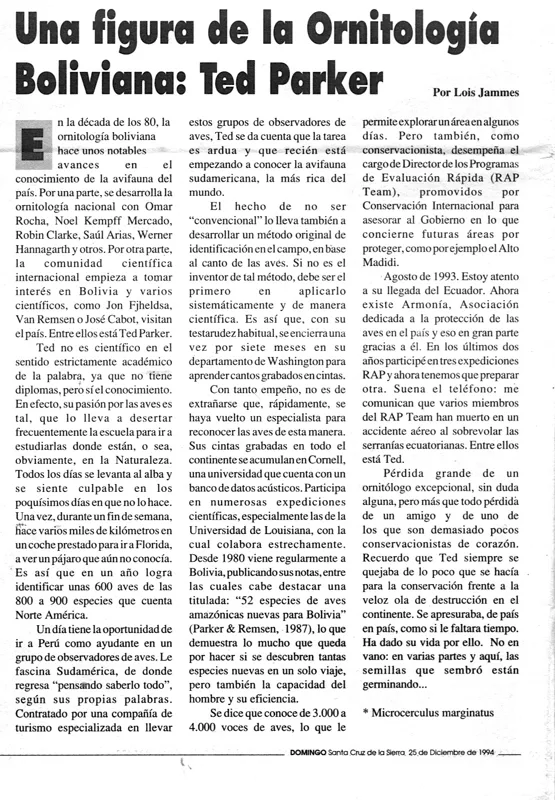
One of them was Ted Parker, the American ornithologist regarded as the world’s foremost expert on bird vocalizations. That day, Jammes had flown him to the area to lead a group of birdwatching enthusiasts.
When the activity ended, they decided to camp for the night. As they waited for dawn, they talked for hours about something they shared: a deep love for birds. At some point during that long night, a concern surfaced, and Jammes thought aloud:
—There’s no one in Bolivia working to conserve birds. Why not do something?
That “something” soon took concrete shape: creating an organization dedicated to bird conservation in Bolivia. Parker, a man devoted to the wild birds of South America and deeply concerned about the destruction of ecosystems, was immediately enthusiastic about the idea. Daybreak came, and the two men parted with a promise to stay in touch. Parker wanted to follow closely the fate of the project that had taken root beneath the moonlight.
A month later, in September 1992, the idea began to take flight. Jammes reached out to Biology students at the Universidad Autónoma Gabriel René Moreno and encouraged them to join the effort. One of the first to take up the challenge was Érika Cuéllar. More people soon joined, and from this collective effort Armonía was born in Santa Cruz de la Sierra—the first Bolivian organization dedicated to bird conservation.
When Parker learned the news, he not only celebrated the emergence of a project that would help fill a long-overlooked gap in Bolivia, but also told Jammes that, once he had completed an expedition planned for August 1993 in Ecuador, he would travel directly to Santa Cruz to meet with the team and bring materials that could help strengthen the organization.
But fate cut that plan short, and Parker never returned to Bolivia. On August 3, 1993, the small plane he was flying in while conducting biodiversity research in a remote cloud forest in Ecuador crashed into a mountainside. He was 41 years old. Several of his colleagues also died in the crash.
“Everything he was bringing us must have remained in his luggage,” Jammes recalls more than three decades later.
The loss was a devastating blow, but it also became another reason to strengthen Armonía. Keeping the organization alive meant, in a way, carrying forward the ideals Parker had shared with Jammes and the commitment that had led him to devote his life to protecting nature.
“I remember Ted always lamenting how little was being done for conservation in the face of the rapidly advancing wave of destruction across the continent. He hurried from country to country as if he were running out of time. He gave his life to it,” Jammes wrote at the time in a tribute to Parker, whom he also considered a friend.
“Your time in Bolivia will not have been in vain. May you rest with the Guajojó. We will make sure its song continues,” he wrote in an article honoring Parker titled Remembering Ted Parker.
The First Steps
In January 1993, with little more than boundless creativity and a deep commitment to protecting nature, Armonía’s first team, led by Louis Jammes, embarked on what at the time seemed an unlikely mission: to spark interest in birds and showcase the extraordinary richness of Bolivia’s avifauna, fostering environmental awareness among Bolivians at a time when environmentalism and nature conservation were rarely discussed.
To achieve this, they started with whatever they had at hand, without waiting for ideal conditions or substantial resources.
“At first, we had nothing—not even an office,” Jammes recalls. To address this gap, he offered his home in Santa Cruz’s La Madre neighborhood. There, sitting on a bed in his bedroom, the founders began shaping, almost by hand, an organization that would eventually become Bolivia’s leading reference for bird conservation.
In fact, when the time came to choose an image to represent Armonía, they selected the Elanoides forficatus, a small bird of prey, for a practical reason. “Simply because it is a bird that is entirely black and white. We didn’t have a color printer back then,” he explains.
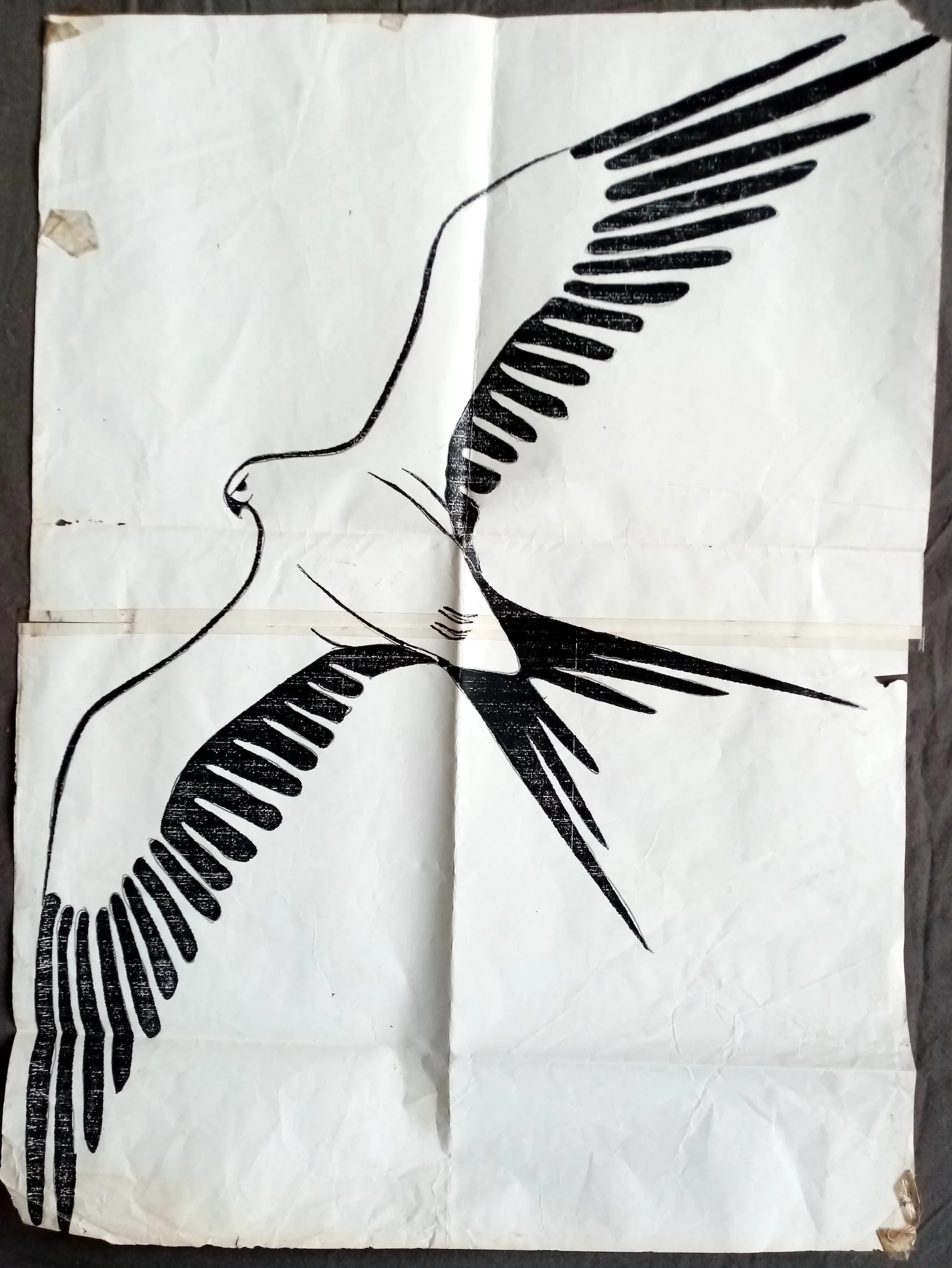
The emblem soon appeared not only on newsletters, letters, and official documents, but was also painted on the aircraft Jammes had made available to support scientific and conservation work. He used it to transport researchers to different regions of Bolivia at reduced rates. Wherever these expeditions went, the name Armonía traveled with them.
Jammes says the initiative was sustained by the unconditional dedication of its members. No one received a salary. Each person contributed hours of work, enthusiasm, and, whenever possible, money from their own pockets to keep the project moving forward.
“In reality, we had nothing except tremendous enthusiasm and the support of many people. We were poor, but full of ideas, and we were happy.”

The Beginning of Armonía’s Work
Armonía’s first year was an intense one. Among the organization’s earliest tasks was compiling a list of bird species recorded in Bolivia. After painstaking research, the team documented 1,336 species in a hand-stitched booklet titled Birds of Bolivia. The publication became a pioneering and indispensable resource for birdwatchers, researchers, and bird enthusiasts across the country.
At the same time, they created Bolivia’s first birdwatching group, with 40 members. They also established a database on Bolivia’s avifauna and built an international network of contacts they called “antennas”: people who shared information, promoted Armonía’s activities, and kept the organization connected with birdwatchers, researchers, and conservationists across Bolivia and around the world.
Among these “antennas” were Luis Rea in La Paz, Bolivia; Robin Foster and Louise Emmons in the United States; Adrián Azpiroz in Uruguay; Julio Rafael Contreras in Argentina; Yuri Machado in Brazil; Jesús Guerrero in Spain; and Robin Brace in England.
During this period, Armonía also gave numerous Biology students from the Universidad Autónoma Gabriel René Moreno the opportunity to develop and lead their own conservation projects. According to Jammes, few organizations at the time offered young researchers such a high degree of trust and responsibility.
“If a student came to Armonía with a project and we agreed with it, we would look for ways to fund it, but the project director was the student who had proposed it.”
It was not long before Armonía’s dynamism began attracting attention beyond Bolivia’s borders. During its first year of activities, BirdLife International invited Armonía to become its partner organization in Bolivia, bringing it into one of the world’s most important bird conservation networks.
This recognition was reflected in a letter sent to the organization on November 30, 1993, in which BirdLife stated: “We consider Armonía not only to be the organization leading bird conservation in Bolivia, but also the Bolivian conservation organization that most closely represents our interests and has the greatest potential for growth.”
That recognition came with new challenges. Before long, Armonía would take on what would become its first major research project.
The Blue-throated Macaw: Armonía’s First Major Conservation Fund
Around the same time that Armonía was beginning to find its footing, American scientist Charles Munn of the Wildlife Conservation Society had confirmed the survival of the Blue-throated Macaw (Ara glaucogularis), a Bolivian endemic that was then believed to be on the brink of extinction.
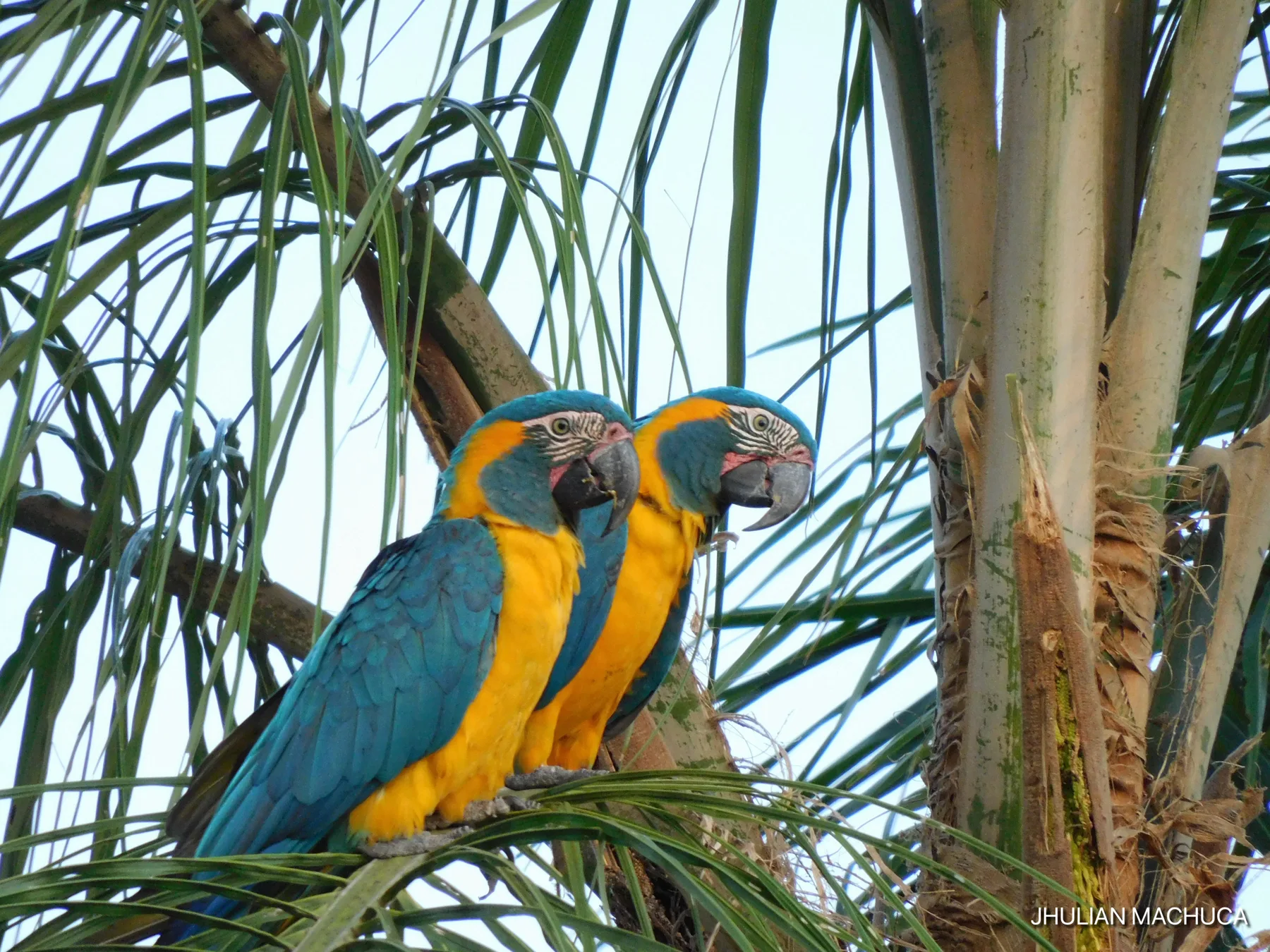
As soon as it became known that the species was still surviving in Bolivia, there was an urgent need to better understand its distribution and conservation status. Munn then contacted Armonía and, during a meeting with Louis Jammes and Érika Cuéllar, awarded the young organization an $8,000 research grant to conduct the first survey of this remarkable bird, recognizable by the turquoise and blue hues of its wings and its bright yellow chest.
To carry out the study, Armonía brought on a new volunteer, Alan Hesse, a British-French citizen from France who was then studying Behavioural Sciences at the University of Nottingham in the United Kingdom. Years later, he would become a conservation biologist and the author of the award-winning graphic novel series The Adventures of Captain Polo.
Together with Armonía’s team, Hesse set out to search for the elusive Ara glaucogularis across the areas north, east, and south of Trinidad. The research lasted five months, from July to November 1993.
Conducting the study was a true adventure. At a time when GPS devices were not yet widely available and internet access was nonexistent, and with extremely limited financial resources, the team had to make do with the bare essentials.
“We had nothing. I didn’t even have a tent. I traveled with a mosquito net made from a curtain, a backpack, a machete, and a pair of binoculars that belonged to my father and dated back to the 1950s. That’s how we got started,” Hesse recalls.
After several weeks of searching, the team obtained important results. According to Hesse, they found highly isolated populations of just two or three individuals. Most of the species’ population was not found in protected areas, but on large ranches and cattle-grazing lands whose owners “were not conservation-minded at all because they had a purely extractive approach.”
They also identified a less visible problem: most local people were unaware of the Blue-throated Macaw’s uniqueness and critical conservation status. In some cases, they could not even distinguish it from other macaws found in the region. As an example of the consequences of this lack of information, Hesse recounted in his article Searching for the Blue-throated Macaw the case of two young men who, according to a teacher from a rural community in Beni, killed a Blue-throated Macaw to use as fishing bait.
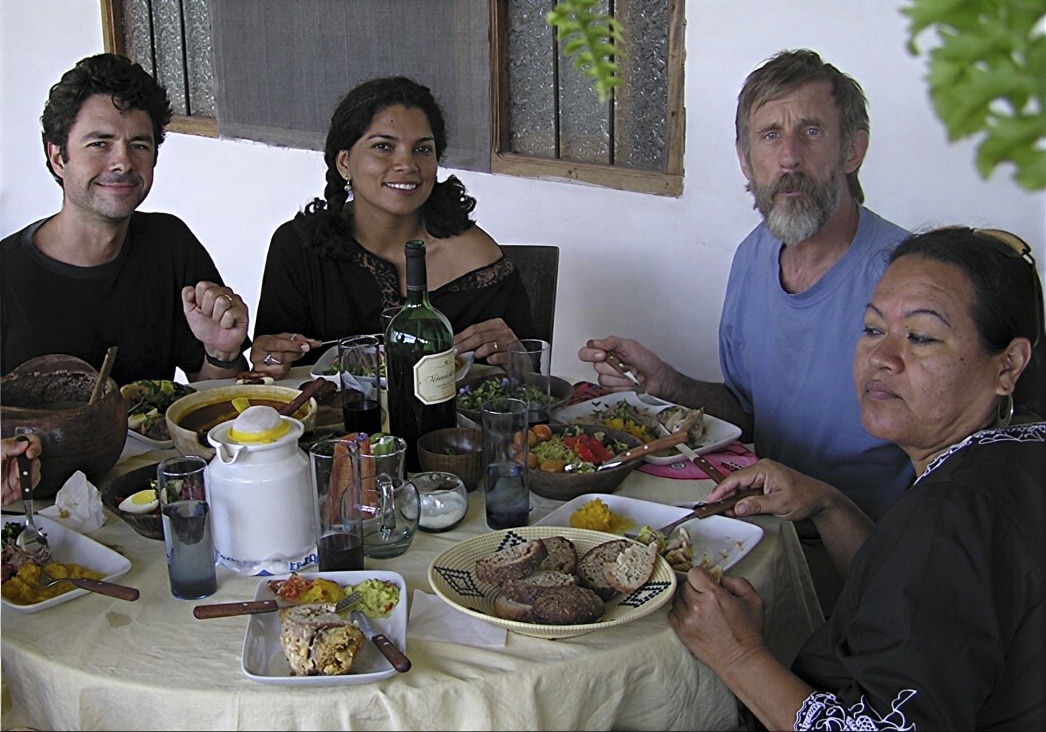
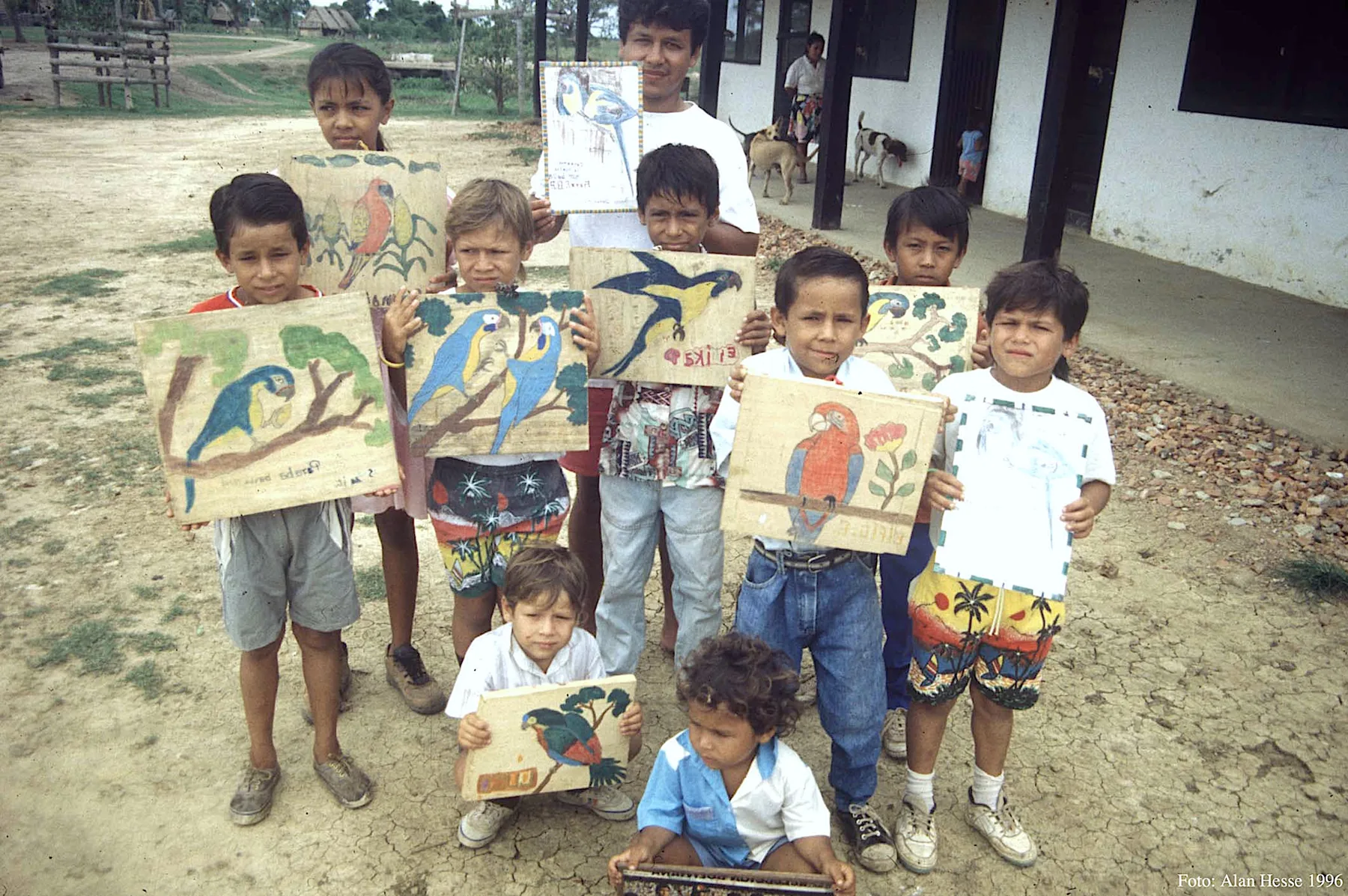
To address this situation, the team realized that their first task was to help local people connect with this unique bird. During their journeys through the region, they shared food with local residents and distributed drawings of the Blue-throated Macaw along with boxes of colored pencils for children. These activities opened opportunities to talk with families about the importance of the species and to foster a sense of pride in living alongside a bird found nowhere else on Earth. At the same time, they helped children learn to recognize and value the species.
Between 1994 and 1996, the organization achieved further milestones. It published two newsletters and two issues of its annual magazine, Guajojo. The organization also continued to welcome new members, including ornithologists Miguel Ángel Arrivas and Francisco Sagot, who strengthened its scientific work.
Thanks to a $20,000 donation from the then-British Ambassador to Bolivia, Michael Jackson, Armonía was able to rent an office in Santa Cruz’s first ring.
During those same years, Armonía’s relationship with BirdLife International also opened the door to a valuable academic contribution. Renowned British ornithologist David Snow decided to donate his entire specialized ornithology library to the organization. The shipment, consisting of two tons of books, reached Bolivia by sea after several months of travel.
“I know it was two tons because, thanks to the Blue-throated Macaw project, we had a Mercedes Jeep with that load capacity, and we filled it completely with the library,” Alan Hesse recalls.
The consolidation of this first chapter was sealed on August 17, 1996, when Armonía obtained its legal status as a nonprofit organization. Although its work had begun years earlier, the institution adopted that date as its official founding date.
The Rebirth
The Rebirth
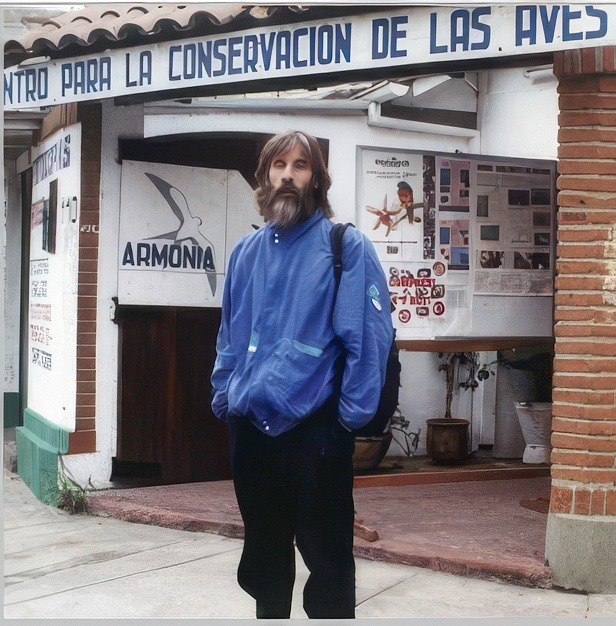
In 2002, after nearly a decade marked by the search for the Blue-throated Macaw, Armonía opened a new chapter in its history under the leadership of Bennett Hennessey and Sebastián Herzog, who took on the roles of Executive Director and Scientific Director, respectively.
By then, Armonía was virtually inactive, Herzog recalls. Yet both saw an opportunity in the organization: to rebuild it from the ground up and begin a new chapter.
Looking back on that period, Bennett Hennessey and Sebastián Herzog remember numerous challenges, but agree that one of the most difficult to overcome at the outset was getting the administration in order as the organization sought to reinvent itself. Accustomed to spending long days in the field studying birds, both suddenly had to take on responsibilities for which their training as biologists had not prepared them: securing funding, managing finances, and building a solid institutional structure.
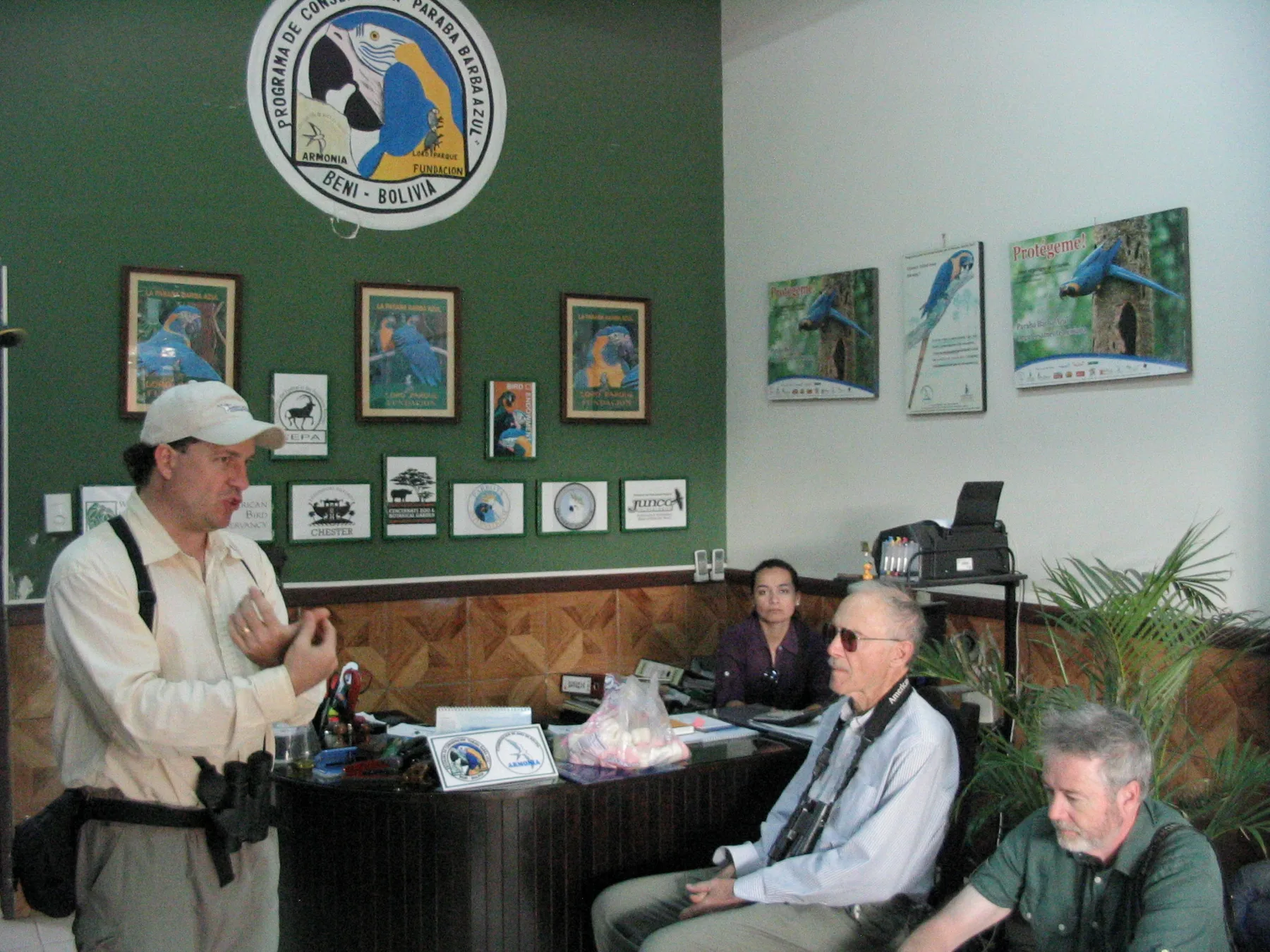
“These are issues that are always difficult at the beginning of any organization. Many start with people like Bennett and me—people who love birds, who are biologists or come from related fields, and who enjoy spending time in the field studying birds. But when it comes to laws, administration, regulations, rent, taxes, and everything else, we don’t have the slightest idea,” Herzog explains.
Nevertheless, they rose to the challenge and, little by little, began laying the foundations for the new Armonía. They established a board of directors, developed institutional bylaws and protocols, and, thanks to new funding, created an administrative and accounting department. They also acquired the property where Armonía’s current office in Santa Cruz is located.
During this process, Bennett Hennessey highlights the decisive support of his wife, Ruth Alipaz. At the time studying Business Administration, Alipaz suggested that he hire an administrator to oversee an area that none of the founders had expertise in.
“The first thing I did, and this was my wife’s suggestion, was to look for an administrator. She told me: ‘You need an administrator. You don’t know anything about financial reporting or administrative management.’”
Following her advice, one of the first professionals they brought on was Grover Bravo, who took over Armonía’s administration. “From there, we grew quickly because we demonstrated that we were a more solid organization,” Hennessey recalls.
With a stronger institutional structure in place, Armonía was able to broaden its scope of work. For Hennessey and Herzog, the challenge was no longer simply to strengthen the organization, but also to redefine its role.
Until then, much of its work had focused on birdwatching, scientific research, and sharing knowledge about Bolivia’s avifauna. These activities remained fundamental, but both understood that they were not enough. Knowing the species and documenting their status was only the first step; if their decline was to be halted, that knowledge needed to be translated into concrete conservation action.
This shift marked a turning point in Armonía’s history. From then on, the organization began combining scientific research with initiatives aimed at protecting the most threatened species and their habitats, while also incorporating a strong focus on working with Indigenous and farming communities.
Bennett Hennessey says this change also required him to rethink his own understanding of conservation.
“At that time, I was a biologist from outside the country who thought conservation meant working in the field, creating reserves, and keeping people out. But several of the Bolivian coordinators made me realize that this was not enough. They understood that communities had to be involved; it couldn’t simply be a project in the field.”
The Mamaco conservation program helped him understand this reality, which was new to him. One of the coordinators, Hugo Aranibar, proposed allocating part of the budget to help an Indigenous community obtain their identity documents. At first, the idea seemed strange to him.
“I thought: We’re protecting birds—what does this have to do with conservation? But I trusted him,” Hennessey says.
Over time, he understood that the decision had helped the community strengthen the recognition of its territory and, eventually, establish the Mamaco Refuge.
“That’s when I understood that helping people is also conservation,” he concludes.
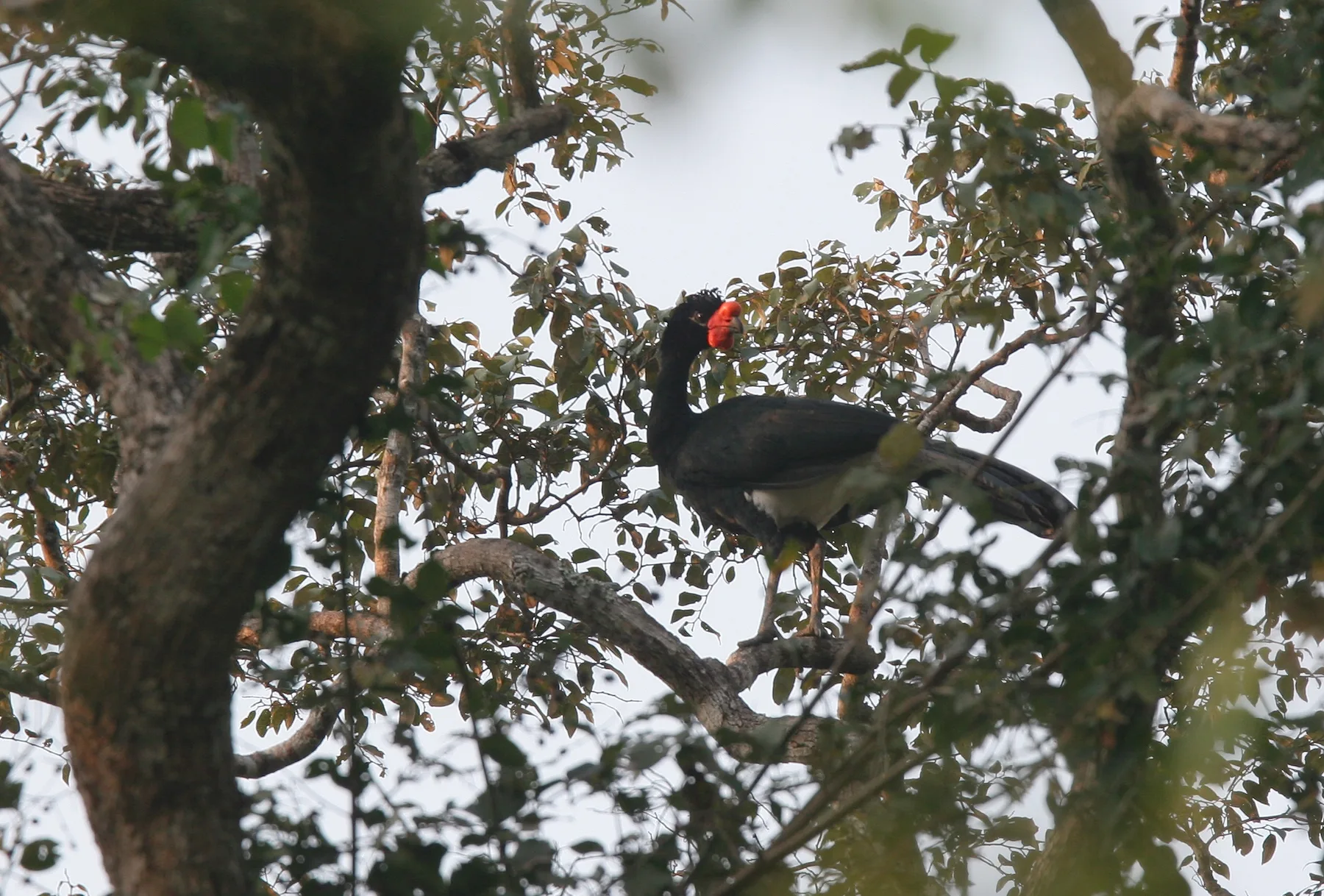
The support of BirdLife International was instrumental in turning this new vision into reality. With its backing, Armonía launched a series of programs focused on conserving threatened species and priority ecosystems across Bolivia. These included initiatives for Important Bird and Biodiversity Areas (IBAs), as well as programs dedicated to the Red-fronted Macaw, Blue-throated Macaw, Cochabamba Mountain Finch, Horned Curassow, Wattled Curassow, and Polylepis woodlands, among others.
At the same time, these projects became a platform for a new generation of Bolivian biologists and conservationists to enter the field of threatened bird conservation. One of them was Rodrigo Soria, who first encountered Armonía in 2003 through his thesis advisor at the time, Sebastián Herzog. Shortly after completing his studies at Universidad Mayor de San Simón, Herzog invited him to join the organization and take charge of several research projects.
Soria accepted the challenge without hesitation, and his work contributed to one of the most important milestones of that period: the rediscovery of the Horned Curassow (Pauxi unicornis), a Critically Endangered species, in the humid montane forests of the Isiboro Sécure protected area and Indigenous territory.
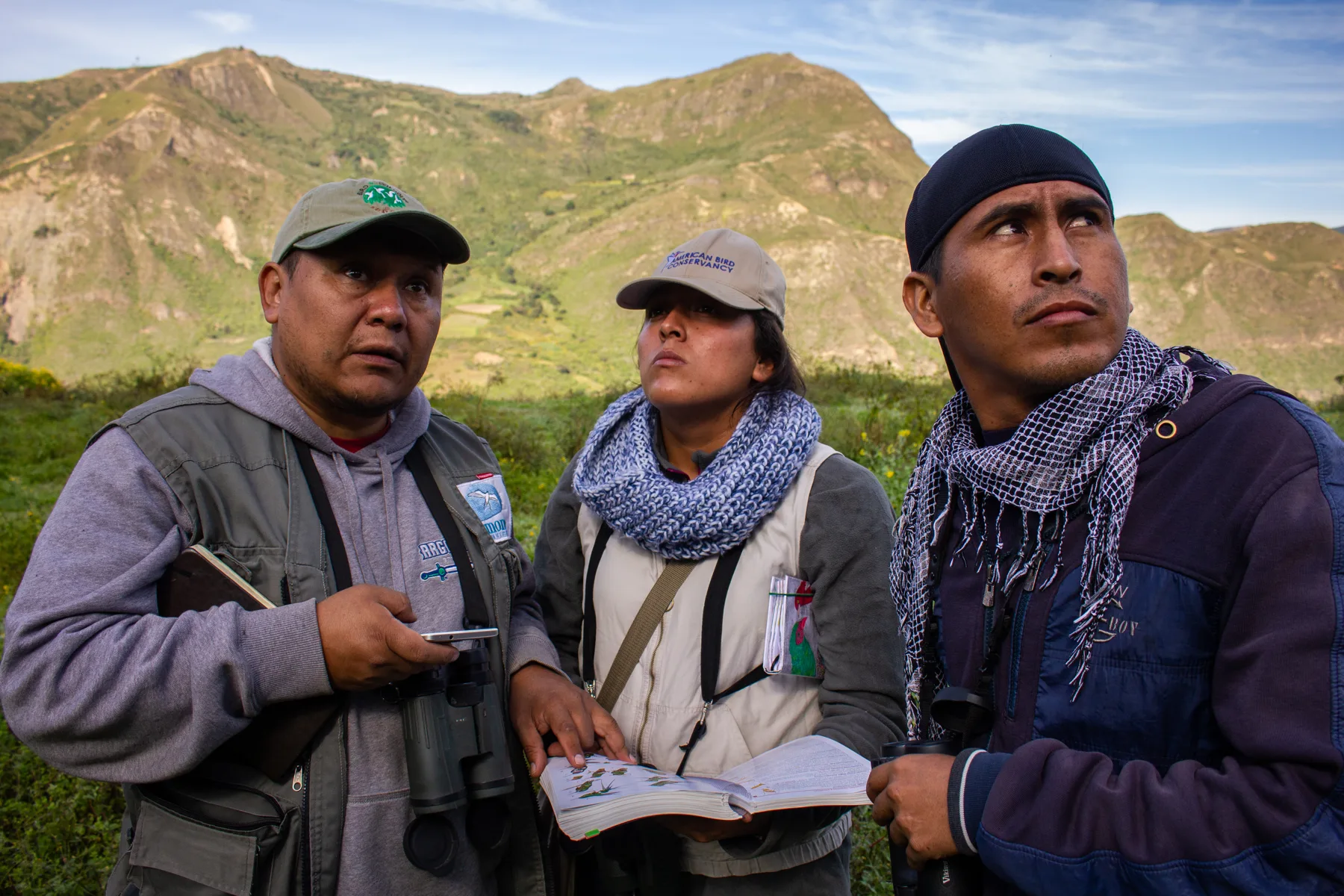
“It is important to keep in mind that this is a species found in a very challenging area to work in. Despite that, what we achieved was, first, a better understanding of the bird’s distribution and the levels of threat—which were not the same at all the sites where its presence was known—and the engagement of several local partners, something many people believed was impossible,” he recalls.
After several years of work, Soria left the organization in September 2005 and spent a brief period away from Armonía pursuing graduate studies abroad. He returned to the organization in June 2011 as Director of Programs and later, in 2017, assumed the position of Executive Director. Since then, he has led a team committed to conserving birds and their habitats, carrying forward a mission that has always served as Armonía’s guiding light: creating harmony between people and nature.
Under his leadership, the organization has strengthened and expanded its conservation programs while consolidating its presence at the national level.
“During this period, we have seen the diversification and strengthening of several programs. We have increased our national influence in areas where we had not previously had a strong presence, through cooperation with other national and international organizations, stronger support for SERNAP, and greater engagement with decision-makers at the local, regional, and national levels,” Soria says.
For Soria, although significant challenges remain, Armonía has played a decisive role in transforming bird conservation in Bolivia. The organization has not only promoted research and conservation programs to protect the country’s many threatened bird species, but has also helped train new generations of conservationists, strengthen partnerships with local communities, and position Bolivia as a regional leader in biodiversity conservation.
This journey is reflected in dozens of projects, research efforts, and collective initiatives that have shaped the organization’s history. Yet capturing everything that has been achieved in a single story would be impossible. Looking back, Armonía’s members agree that certain milestones stand out for the way they illustrate the impact of this work.
The Blue-throated Macaw: A Conservation Success Story
“Armonía’s mission is to prevent species from going extinct, and throughout our history, we have achieved something that very few conservation organizations in the world can claim: reversing the population trend of a species that was on its way to extinction,” says Soria.
The Blue-throated Macaw is perhaps the best example of this. In the early 1980s, this species, endemic to the savannas of Beni, was thought to have disappeared. During the 1990s, only a handful of individuals were known, and by the 2000s, some estimates placed the wild population at between 125 and 150 birds. However, thanks to the national census conducted by Armonía in 2015, the population was confirmed to be approaching 450 individuals. By 2025, estimates placed it at between 600 and 800 birds.
According to Soria, this population growth was made possible by a series of actions undertaken by Armonía. One of them took place in 2008. Until then, Bennett Hennessey recalls, the species was known only from scattered pairs across the Beni savannas.
“It was one pair here, another an hour away on horseback. We had never seen a large group.”
The story changed when Hennessey and Mauricio Herrera secured funding to explore a remote area that no one had previously reached because of the high cost of accessing it. There, Herrera Carrera found 17 Blue-throated Macaws gathered in a single location—the largest group recorded at the time.
“Back then, seeing 17 individuals together was incredible. Mauricio called me and said: ‘We’ve found the largest group of Blue-throated Macaws, and the owner wants to sell the ranch,’” Hennessey recalls.
For Tjalle Boorsma, Armonía’s Director of Development, “we would always find one pair, two pairs, or a pair with a chick, but never groups. That was the big discovery. In 2006 or 2007, Mauricio Herrera made an extensive survey across much of Beni and, at the Barba Azul Reserve, found a group of 17 macaws. It was one of the first times, or perhaps the first time, that a large group had been found—something they had not observed anywhere else. That was the reason Armonía decided to purchase the property.”
He adds that “at that time, we knew nothing about the movements of the Blue-throated Macaw. Now we know that more than 200 individuals use the reserve to feed in the gallery forests and that, thanks to all the knowledge generated through monitoring, they gather there and then disperse to other areas outside the reserve to nest. That information did not exist in the past; it is knowledge we have gained over the last 10 to 15 years.”
After learning this, Hennessey contacted World Land Trust, Rainforest Trust, and American Bird Conservancy and proposed that they help finance the purchase of the property. The response was positive, and in 2008 Armonía inaugurated the Barba Azul Nature Reserve, a unique site dedicated to conserving the Blue-throated Macaw.
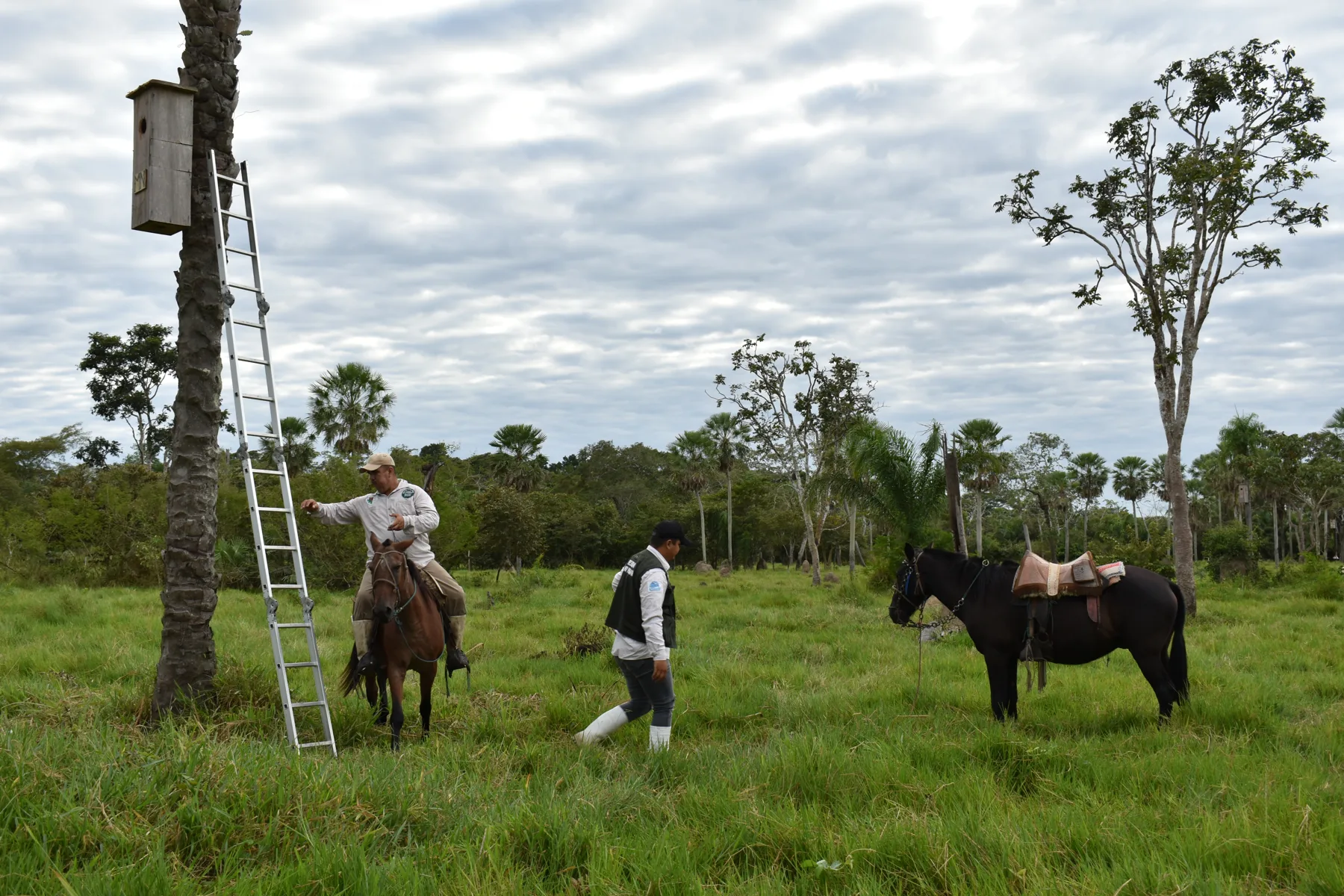
However, this was not the only component of the strategy Armonía launched to reverse the species’ decline. Three years earlier, in 2005, Armonía had established its Nest Box Program, an initiative designed to increase the reproductive success of the Ara glaucogularis, a Critically Endangered species threatened by illegal trafficking, hunting, and habitat loss. For more than a decade, nest boxes were installed on a private ranch, which the team could access only with the owners’ permission.
This is where conservationist Laney Rickman entered the story. A passionate advocate for the Blue-throated Macaw, she learned about Armonía’s work in Bolivia in 2005 and decided to make the species’ conservation a personal cause. Through her efforts to mobilize international support, the resources needed to acquire 650 hectares of the former Esperancita ranch were raised in 2017–2018.
Although Laney died before seeing the project completed, the reserve established on the property was named in her honor: the Laney Rickman Nature Reserve. Her sister, Dorothy Paterson, continued to mobilize financial support from the United States and, years later, brought Laney’s ashes to the reserve. They now rest there, in the reserve that bears her name, while new generations of Blue-throated Macaws find a safe refuge in which to breed and ensure the species’ continued survival.
The results of this strategy speak for themselves. What began as an experiment became one of the most effective tools for preventing the species’ extinction. As of the publication of this report, 183 chicks have successfully fledged from artificial nests since the Nest Box Program began. In the 2025–2026 breeding season alone, 19 chicks took their first flight, matching the highest number ever recorded, achieved the previous season. The impact has been so significant that it is now estimated that nearly one in four wild Blue-throated Macaws was born in a nest box installed by Armonía.
But none of this would have been possible without the daily work of the park rangers who, over the years, have built, installed, and monitored the nest boxes.
One of them is César Flores, a ranger at the Laney Rickman Nature Reserve since 2009. Over the years, he has not only participated in monitoring the Blue-throated Macaw, but has also refined the construction of the nest boxes. He recalls that the first models had openings that were too wide and were therefore occupied by owls, ducks, and other species. Over time, he reduced the entrance diameter to 11 centimeters, allowing the boxes to be used almost exclusively by Blue-throated Macaws.
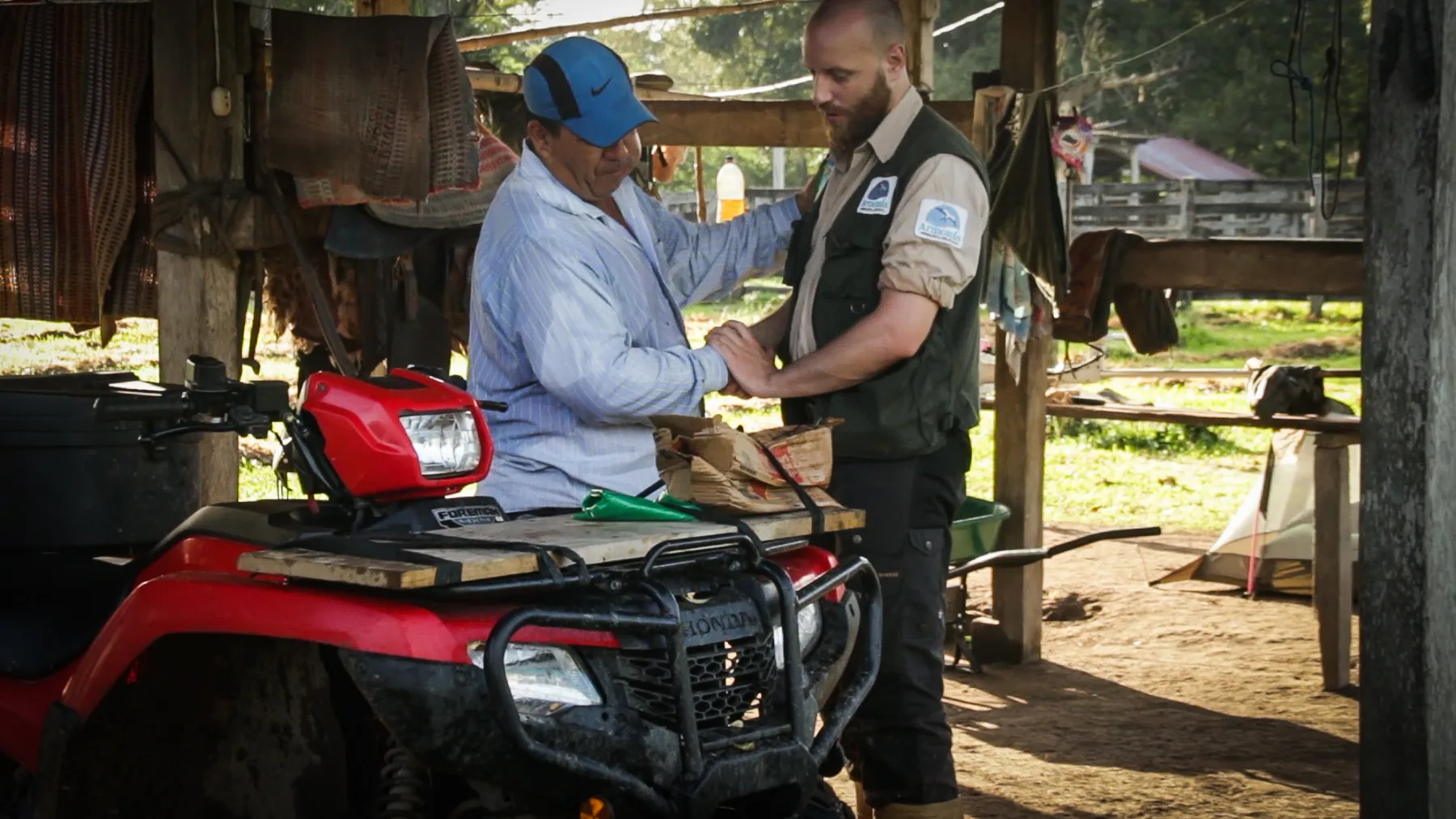
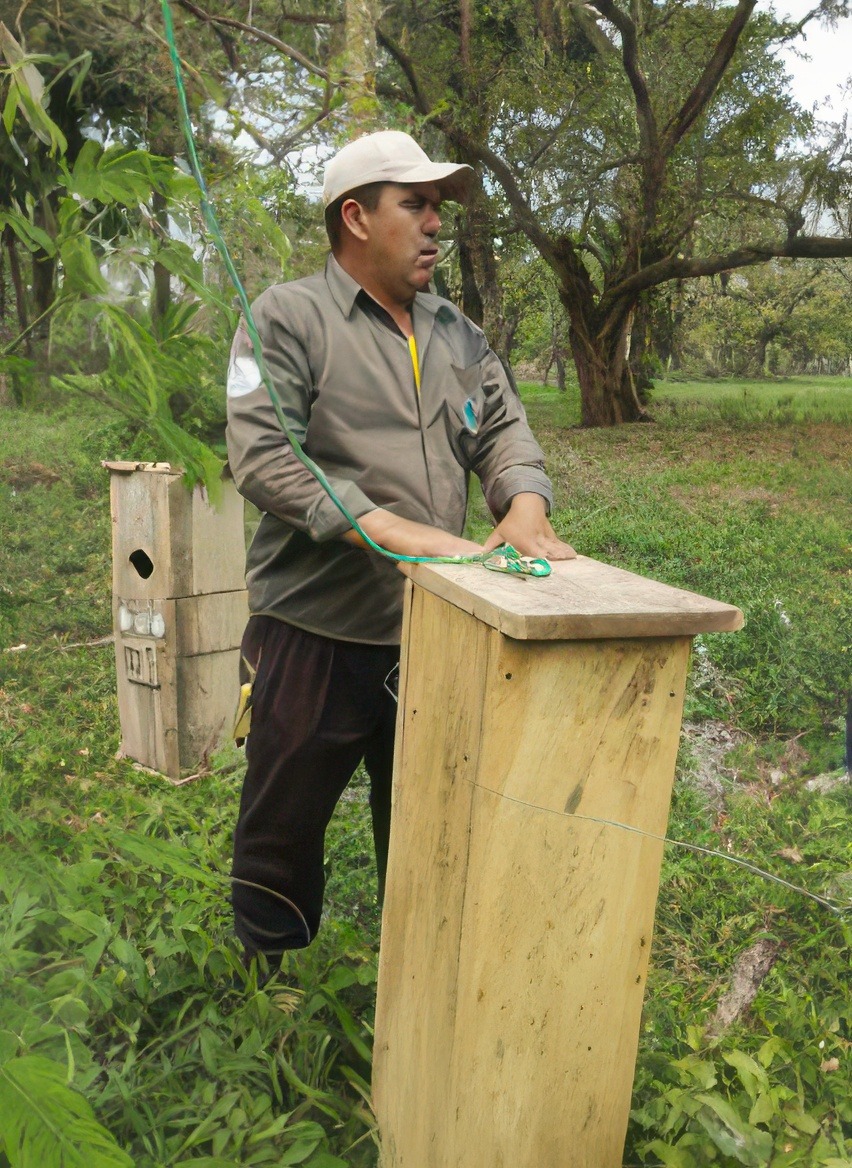
“That is what we have learned most through our work with Armonía. Now we build the nest boxes ourselves and, thank God, they are working. Every year, we have 18 or 19 chicks.”
For Flores, watching the chicks leave the artificial nests is the greatest reward after months of work.
“It is the most wonderful thing we can see, because it is the result those nest boxes are producing for us.”
Birdwatching Tourism to Connect Omereque’s Communities with the Red-fronted Macaw
When Filemón Soto Gómez arrived in the community of San Carlos in Cochabamba, the Red-fronted Macaw (Ara rubrogenys), a Bolivian endemic species listed as Critically Endangered, was seen as a threat. No one could have imagined that decades later, the same bird would become a source of pride and an ally in improving the lives of families in the region.
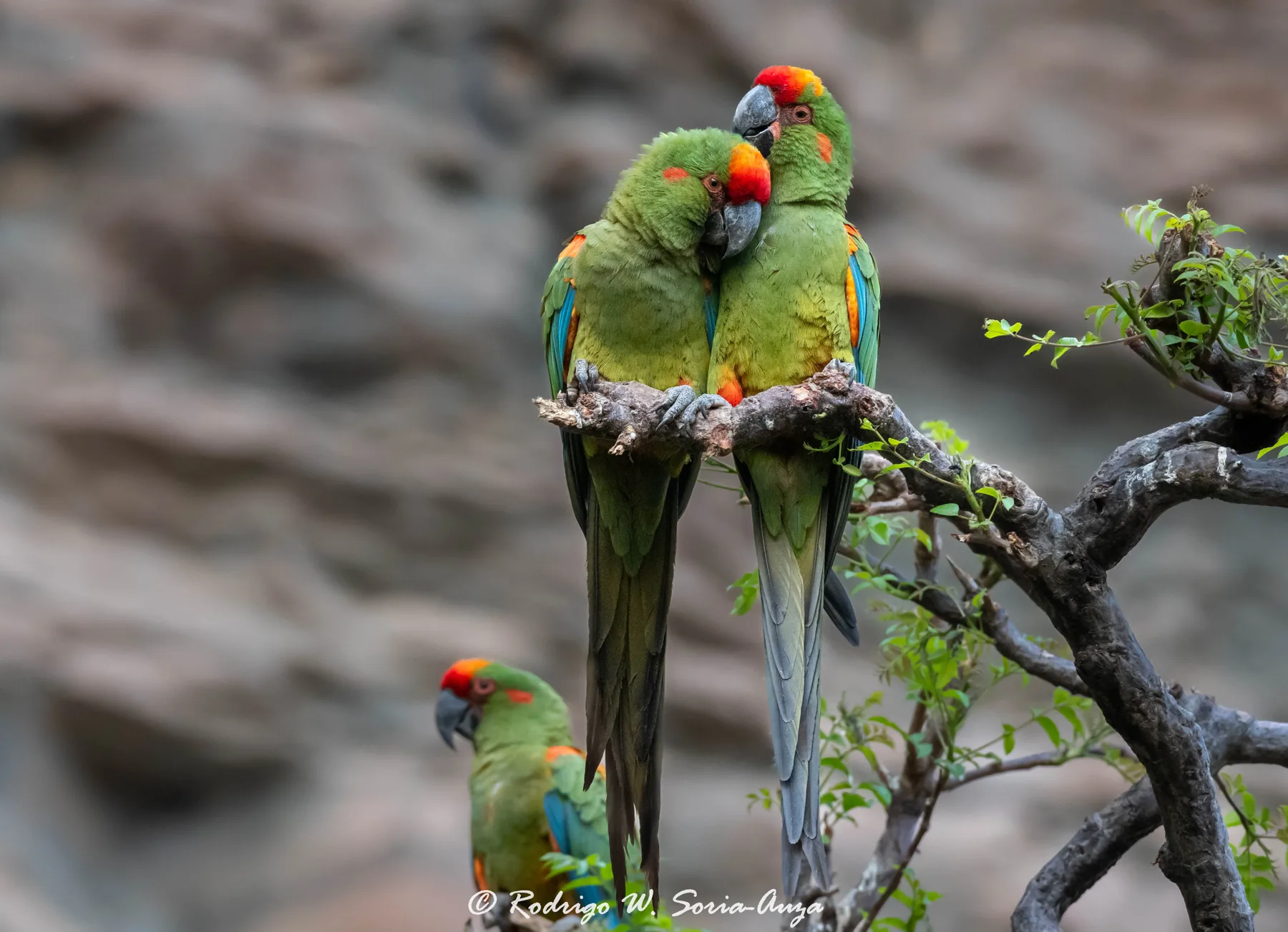
“I arrived in San Carlos in 1979, when this whole area was much more heavily forested. It rained more, and the landscape was very different. Over time, deforestation began, droughts arrived, and everything changed. The Red-fronted Macaw had always been here, but we saw it as a harmful animal because it damaged our maize and peanut crops. We wanted it to disappear because we didn’t know its value.
“It normally fed on native plants such as quebracho and soto. But there were times when it could no longer find enough food, so it entered the fields. In the past, people would chase the macaws away or kill them. Not anymore. Now we protect them.”
This shift in perception did not happen by chance. It was the result of years of working alongside local communities, during which Armonía promoted an idea that initially seemed difficult to imagine: that conserving birds could also create opportunities for the people who live alongside them.
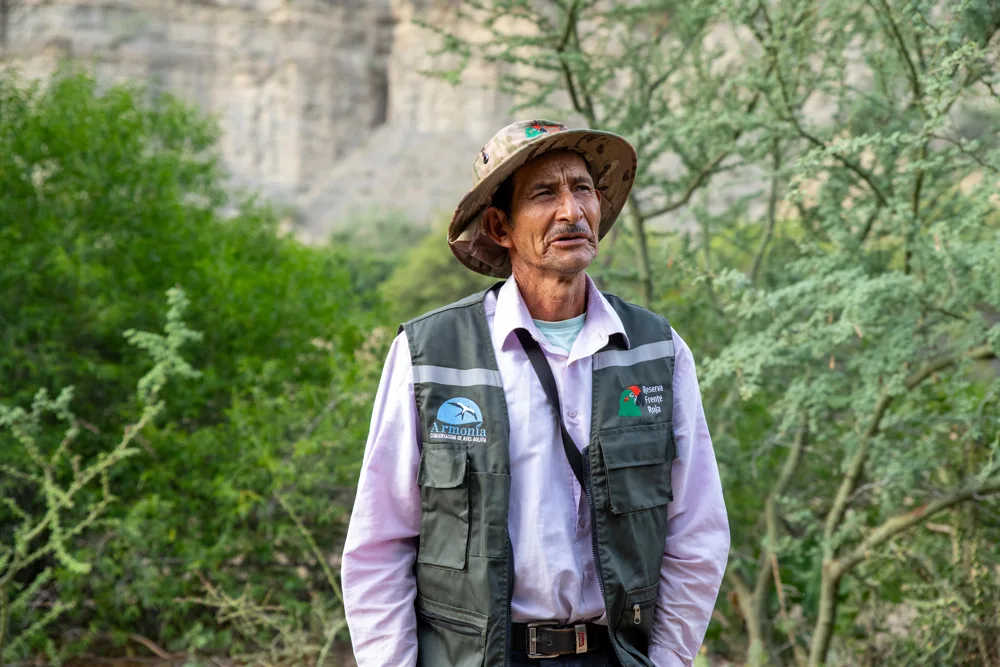
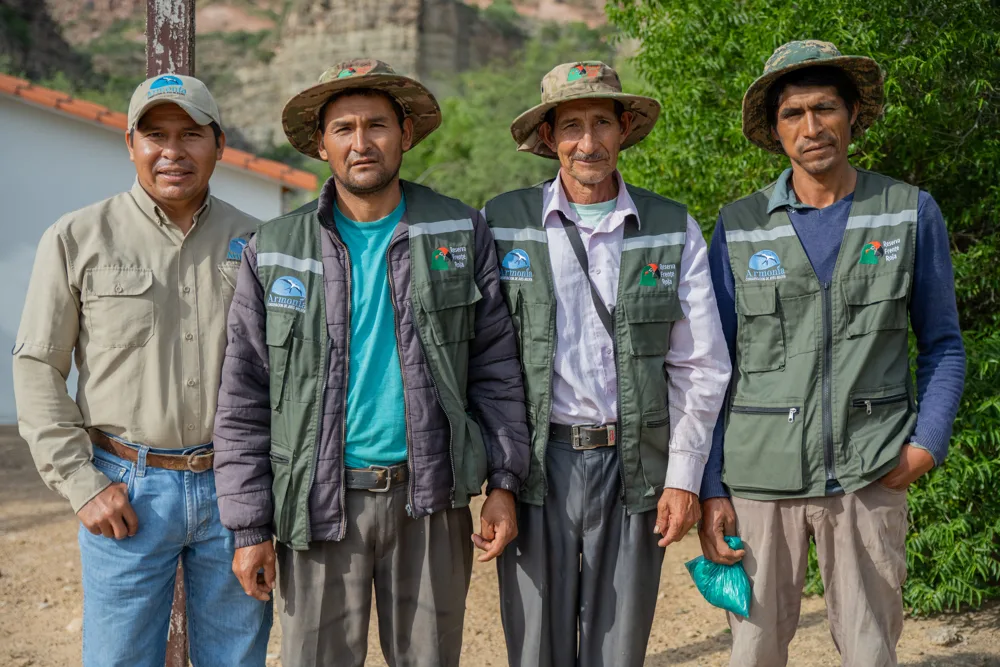
This shift began to take shape in the early 2000s, when Armonía arrived in Omereque, drawn by the region’s extraordinary birdlife. Bennett Hennessey and Sebastián Herzog identified one of the Red-fronted Macaw’s populations there and understood that conserving the species would depend not only on protecting its habitat, but also on involving the communities that lived alongside it.
In 2005, the organization reclaimed a community-owned area that is now the 50-hectare Red-fronted Macaw Community Nature Reserve and began working with the communities of San Carlos, Perereta, and Amaya. Over the years, this process enabled the three communities to take ownership of and responsibility for managing the area.
The approach differed from that of many traditional conservation projects: rather than simply restricting access to the habitat, Armonía promoted community-based tourism and birdwatching, allowing local residents to see the protection of the Red-fronted Macaw as an opportunity for sustainable development and, over time, to take leadership of the initiative themselves.
For Iván Pérez Hurtado, Armonía’s current Administrative Director, who joined the organization in 2007, this way of working is precisely what has set Armonía apart from many other conservation organizations. Instead of arriving with preconceived projects, Armonía seeks to understand each community’s social and economic context, listen to its needs, and build solutions together.
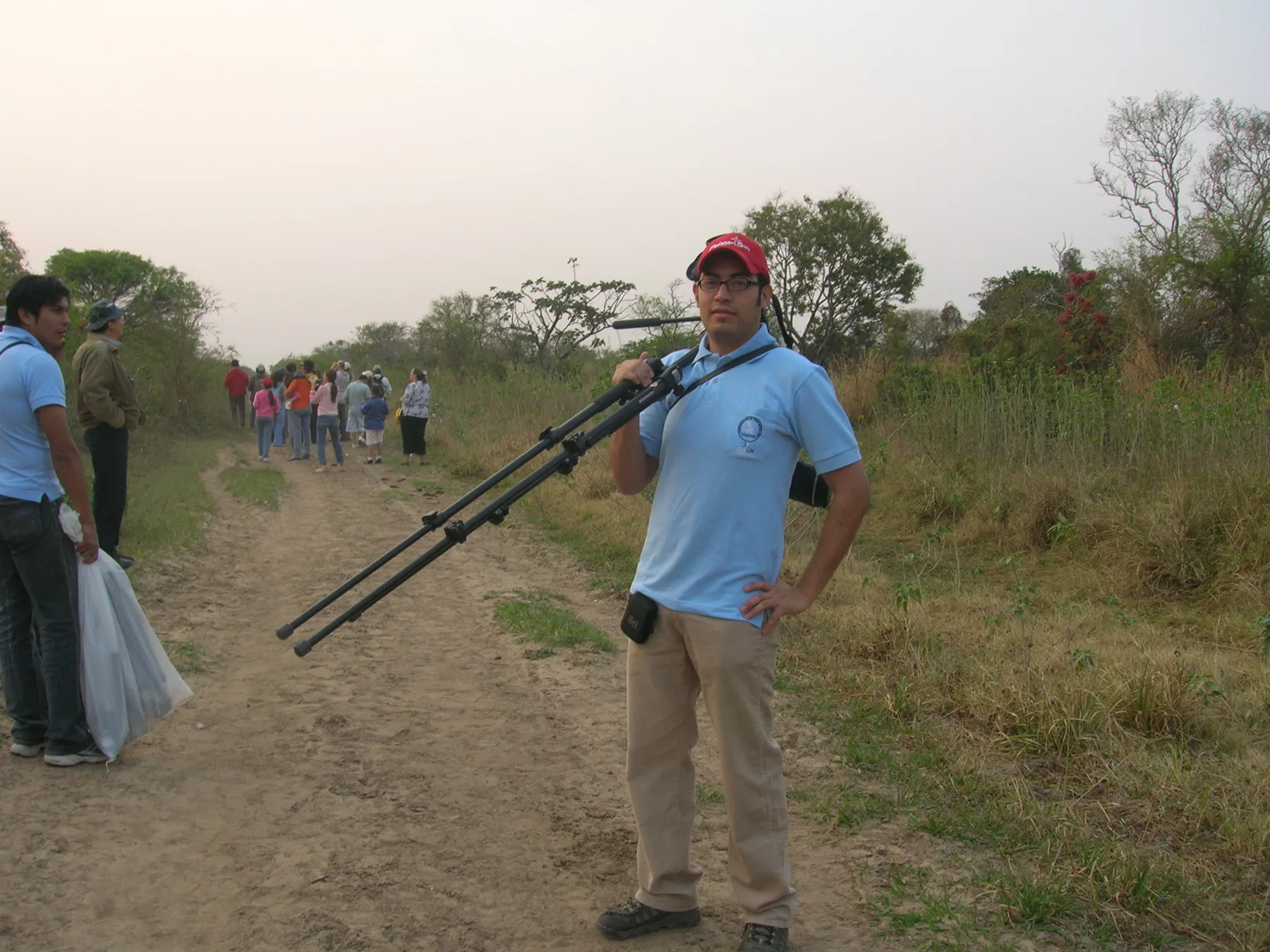
“We don’t come in with a recipe for preserving threatened species. First, we get to know the communities, how they think, and what their needs are,” he explains. In his view, many initiatives fail because they are conceived “from an ivory tower” and then implemented without genuine participation from local people.
This same approach also guides the way Armonía seeks funding for its projects. “There is a term in English, donor-driven. A donor funds a particular issue, and many organizations end up changing even their objectives to access those resources. Armonía doesn’t,” he emphasizes. Rather than adapting its mission to funding opportunities, the organization seeks resources to develop projects that respond to needs identified on the ground.
For the same reason, the work does not end when an agreement expires or funding runs out. The goal, Pérez says, is to remain for as long as necessary so that communities can take ownership of the projects and eventually sustain them independently.
The Red-fronted Macaw Community Nature Reserve embodies this vision. There, the Community Reserve Management Committee, made up of local community members themselves, makes decisions about how the protected area is managed, while Armonía supports the process in an advisory capacity.
“We have been more like advisors; they are really our bosses,” Pérez says.
More than simply a conservation project, the reserve represents a way of working in which communities ultimately become the true protagonists of conservation.
The Alliance Between Ranchers and Conservationists: A Once-Unthinkable Vision That Became Reality
In the 1990s, convincing cattle ranchers in Beni that conserving the Blue-throated Macaw could also benefit them seemed almost impossible. As efforts to protect the species were just beginning, Alan Hesse sought a way to involve the owners of the ranches where some of the last known individuals survived.
With support from BirdLife International, he organized an event in Trinidad to recognize the seven ranchers whose properties provided habitat for the Blue-throated Macaw (Ara glaucogularis). The then Honorary President of BirdLife and Queen of Jordan, together with Bolivian authorities, signed certificates designed by Hesse himself, recognizing the ranchers as “Guardians of the Blue-throated Macaw.” The hope was that this recognition would spark their interest in protecting the species.
However, turning that first approach into a genuine alliance between ranchers and conservationists would take many years. It was two decades later that a shift in approach began to transform the relationship between Armonía and Beni’s cattle producers.
Rodrigo Soria recalls that the idea of working directly with ranchers resurfaced in 2016, together with Gustavo Sanches. That year, Armonía organized its first cattle ranching meeting with the goal of introducing producers to the idea that livestock production could be compatible with wildlife conservation.
“The idea of working with ranchers was revived with Gustavo Sanches and me. In fact, in 2016 we organized the first cattle ranching meeting with the goal of planting the seed among ranchers that cattle ranching is compatible with wildlife protection.”
For the meeting, the organization invited ranchers and conservationists from Argentina, Paraguay, and Mexico. Unlike the recognition Armonía had promoted more than two decades earlier, this time the goal was for Beni’s producers to learn about successful experiences directly from other ranchers.
“What we wanted was for ranchers to hear from other ranchers about their experiences combining biodiversity conservation with productivity.”
This shift in perspective was also reflected in Armonía’s own reserves. The organization decided to incorporate cattle ranching into its conservation model, a decision that, according to Soria, was based on both economic and legal considerations.
“The idea of raising cattle on our properties also came from Gustavo Sanches and me. We had two reasons for doing this. First, we both saw that tourism did not have the potential to generate significant revenue for the reserve. Second, we had to comply with the Social Economic Function (FES), meaning that we had to engage in cattle ranching or face the possibility of having the land reverted to the state.”
This approach was put into practice by Tjalle Boorsma, who helped turn the vision into concrete action. One of the main outcomes was the creation of the Beni Ecological Ranching Alliance.
Boorsma joined Armonía’s team in 2015 as coordinator of the Barba Azul Nature Reserve Program. He became Director of Conservation in 2018 and, since 2026, has served as Director of Development.
He acknowledges that he, too, arrived in Beni with a mistaken perception. During his first years, he viewed cattle ranching solely as a threat to conservation. However, working on the ground completely changed his perspective. He came to understand that, in the Beni savannas, cattle also play an ecological role and that maintaining ranching activities is much more favorable for conservation than replacing them with agriculture.
“That was when I began to see ranchers as conservation allies, because as long as a property remains dedicated to cattle ranching, the grasslands are also maintained,” he explains.
This change in perspective also transformed the relationship between Armonía and local producers. Instead of approaching them solely with environmental arguments, the organization began demonstrating through its own experience that it was possible to produce and conserve at the same time.
“We have a presence on the ground and we raise cattle. Producers no longer see us simply as an organization that talks about protecting birds; they also see us as ranchers. And when you raise cattle, you speak the same language,” Boorsma says.
That shared language helped build the trust that had seemed unattainable for years.
“If you don’t protect this forest and allow the trees to grow, your cattle will have no shade. An animal that spends all day under the sun experiences more stress and produces less. That is where conservation practices connect with economic benefits,” he explains.
The experience accumulated at the Barba Azul and Laney Rickman Nature Reserves eventually became a laboratory for practical solutions. Fire management, sustainable cattle ranching, and grassland restoration began attracting other producers, who visited the reserves to learn firsthand about the practices implemented by Armonía.
“We learned by doing, making mistakes, and correcting them. Later, we were able to approach other producers and tell them: ‘We had the same problems you have. This is what we did. Would you like to come and see it?’” Boorsma says.
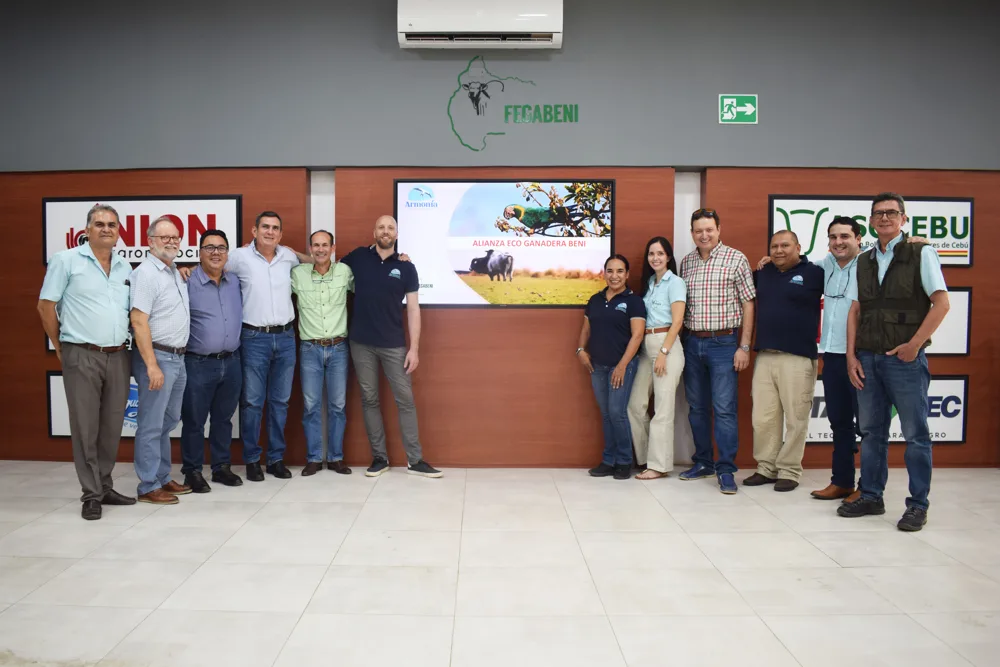
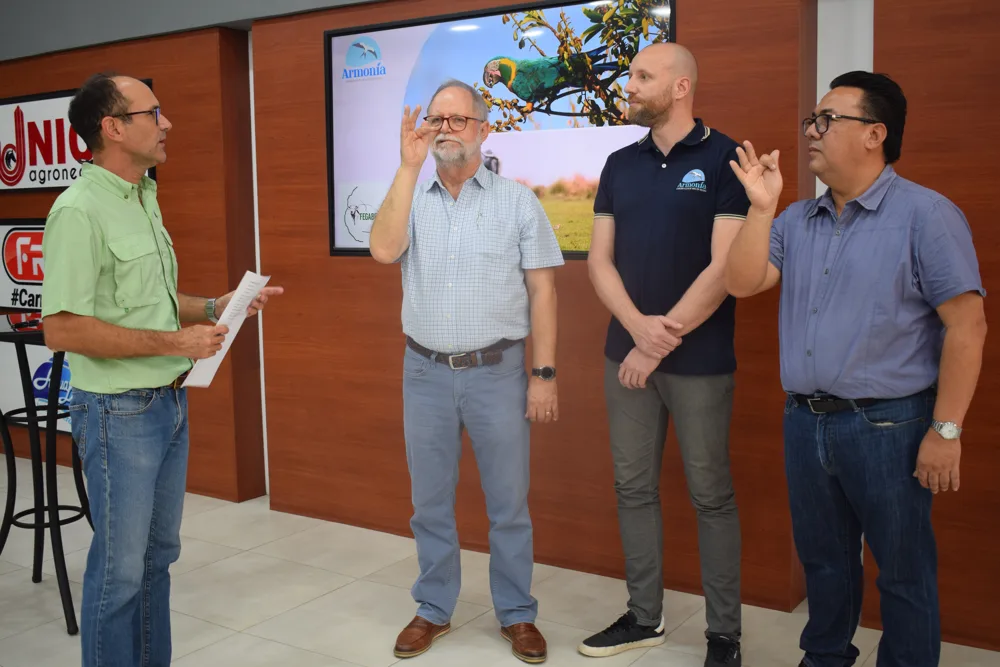
Years later, this process led to the creation of the Beni Ecological Ranching Alliance, an initiative of Armonía and the Federation of Cattle Ranchers of Beni (Fegabeni). The alliance brings together producers and conservation organizations to promote sustainable cattle ranching and demonstrate that protecting the Blue-throated Macaw and maintaining livestock production can not only coexist, but also reinforce one another.
Today, the alliance is chaired by Tjalle Boorsma.
The Birds of Bolivia Guide: The Book That Sparked a Birdwatching Culture
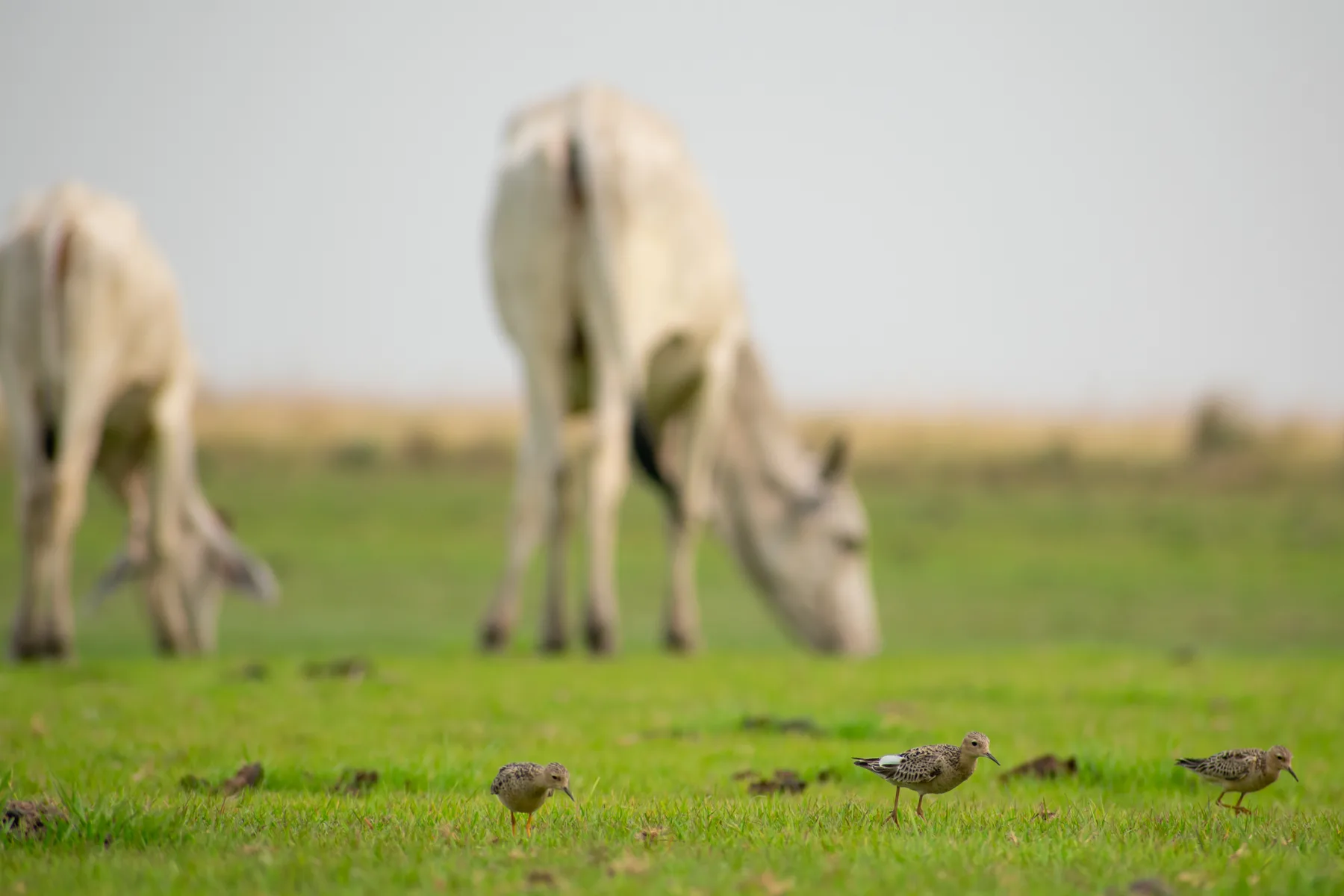
Another milestone in Armonía’s history was the publication of the first modern field guide to the birds of Bolivia. The idea arose from a need Sebastián Herzog experienced after arriving in the country in 1994, when he began fieldwork for his doctoral research. At the time, there was no specialized field guide to Bolivian birds, and researchers had to rely on publications from other countries to identify species.
“You would be standing in the forest with absolutely no idea what had just flown past your nose. And if you can’t identify the species, that is the foundation of all scientific and conservation work,” he recalls.
This gap led Herzog and Bennett Hennessey to envision a book that would bring together, for the first time, the available knowledge on Bolivia’s avifauna. Securing funding took years, and the project faced several setbacks, from the 2008 global financial crisis to a lack of resources needed to complete the editing process. Even so, the team persevered.
During the final months of the project, Herzog devoted as many as 80 hours a week to completing the final manuscript. “I worked like a hermit, Monday through Sunday,” he recalls.
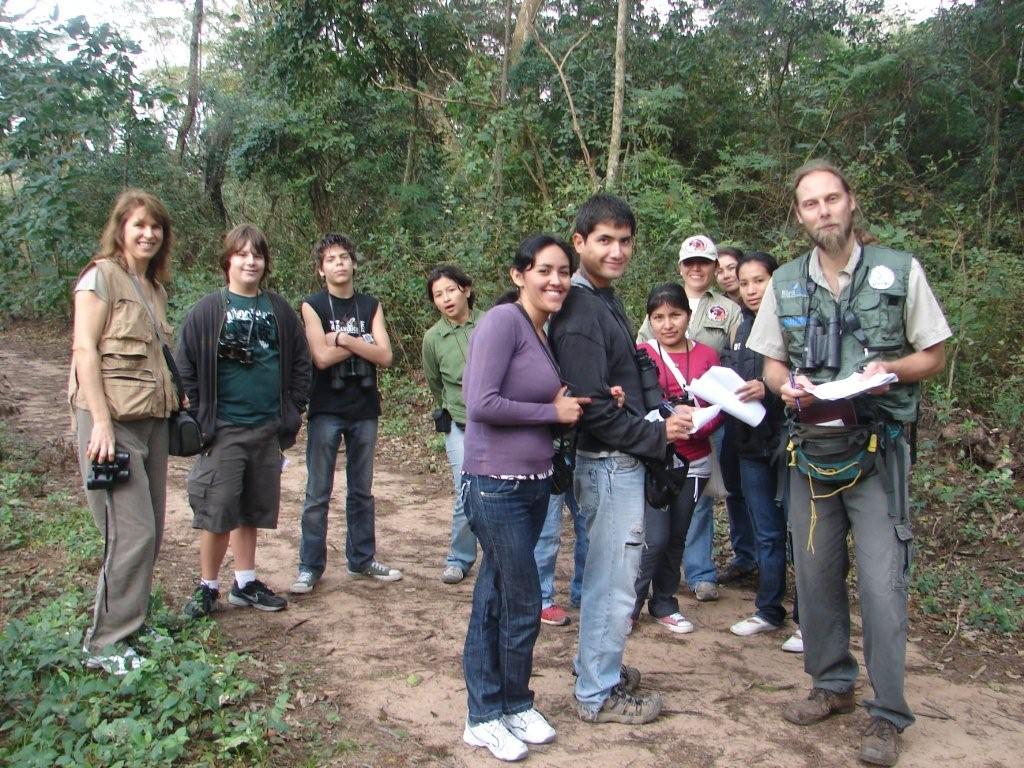
Finally published in 2016 in both English and Spanish, the guide reached far beyond the scientific community. In addition to becoming an essential reference for researchers and birdwatchers, it opened new opportunities for birdwatching tourism. The Swiss Cooperation recognized that it was more than just a book—it was “a sustainable development tool” capable of attracting visitors, strengthening local enterprises, and generating income for communities.
Following its publication, the guide helped facilitate the arrival of international birdwatching tour operators, encouraged the creation of birdwatching clubs across Bolivia, and stimulated the publication of new scientific records on species distributions.
“Basically, a birdwatching movement took shape in Bolivia,” Herzog says.
A Mission That Continues
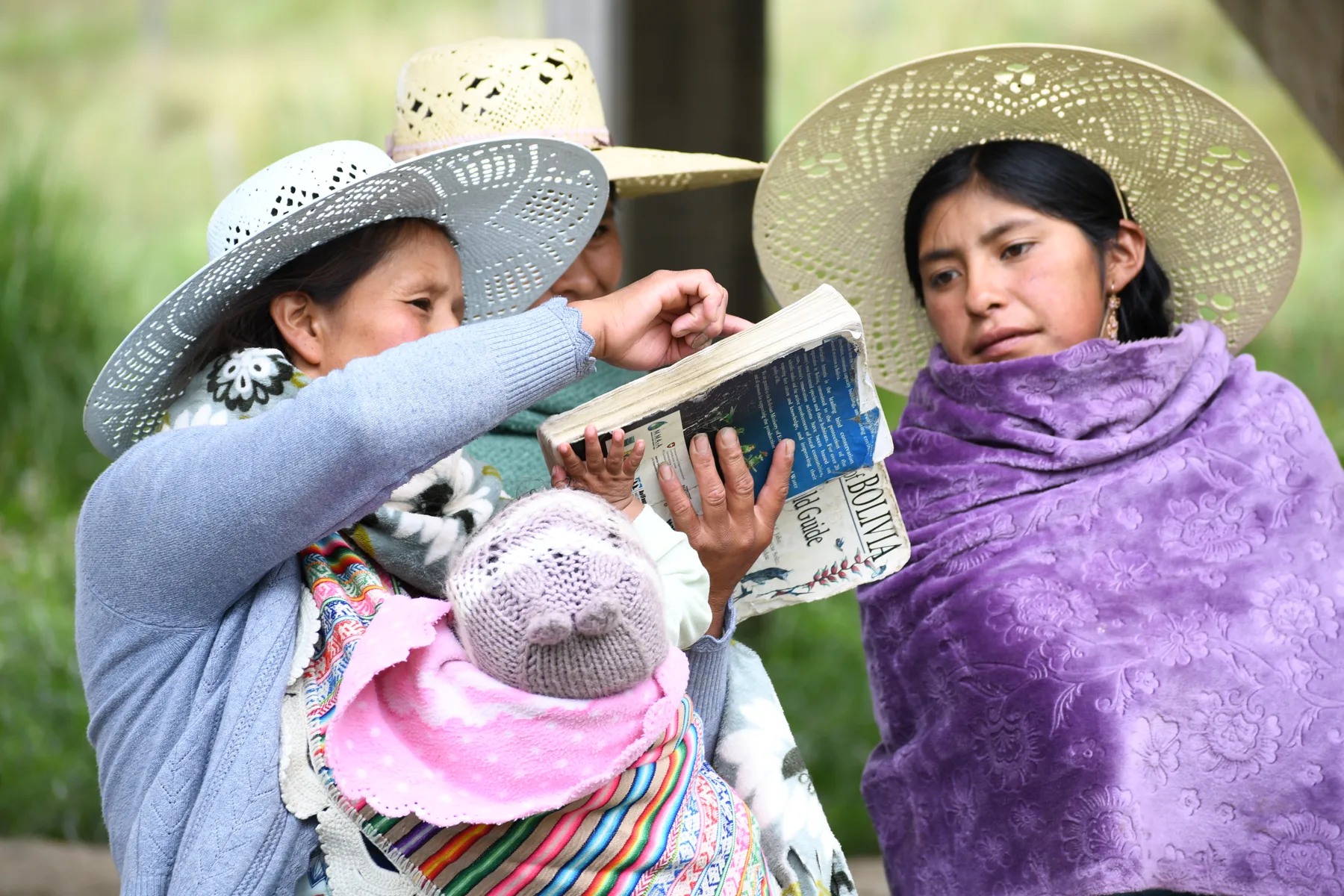
After more than three decades, Armonía understands that its greatest achievements are not limited to the reserves it has established, the species it has helped recover, or the research it has published. Behind each of these milestones is a team of people who share the same conviction: conservation is only possible when collective effort takes precedence over individual achievements.
Rodrigo Soria, Armonía’s Executive Director, considers that one of the greatest challenges over these years has been precisely building and consolidating that team. He explains that each person has different strengths, weaknesses, interests, and priorities, so the challenge is to identify those capabilities and put them toward a common goal.
“No two people are alike. Everyone has their own qualities and weaknesses. As a director, you have to try to make the most of those qualities. One person alone cannot go very far, but as a team, it is different. That is when you can achieve change,” he says.
That process, he adds, never ends. Refining roles, identifying where each person can contribute most, and strengthening collaboration are ongoing tasks. Yet there is something that unites those who are part of Armonía: “Everyone shares a genuine passion for what they do. Someone who does not believe in our mission or who lacks that genuine passion does not last long at Armonía.”
Iván Pérez Hurtado shares this view. In his opinion, the organization’s greatest strength—its team now comprises more than 60 people—has been bringing together individuals who are deeply committed to a cause that goes beyond their jobs.
“Armonía is fortunate to have a highly motivated and passionate staff. Many people end up embracing this way of life because they understand that what we do has an important impact on the country, and that impact is growing,” he says.
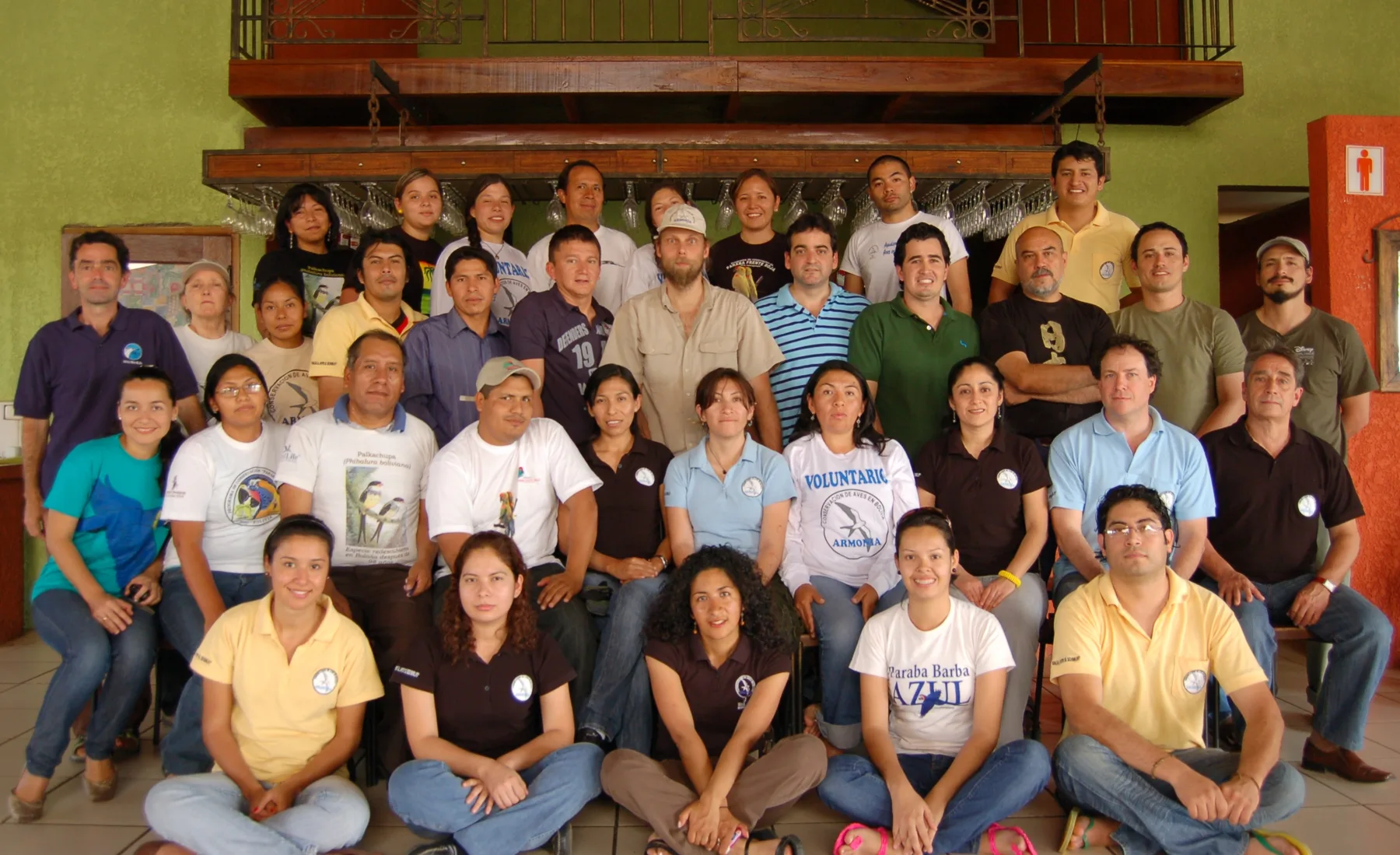
For Pérez, this shared conviction explains why the organization has managed to overcome so many challenges throughout its history. Beyond specific projects or the resources available at each stage, the team has maintained a consistent approach to conservation: working with scientific rigor, building solutions alongside communities, and always thinking in terms of processes that can be sustained over time.
But if there is one thing that characterizes Armonía today, it is the certainty that much remains to be done.
“We have achieved incredible things, but there is still a lot of work ahead,” Soria acknowledges.
In addition to the challenges inherent to conservation, Soria points to a broader challenge that Armonía, like many other biodiversity conservation organizations, must confront: closing the conservation funding gap—the difference between the financial resources needed to protect nature and those that are actually available.
“There is a huge gap between the amount of funding needed to protect our nature and the amount of funding available to all conservation organizations. It is important—truly important and urgent—to close this gap. That is why Armonía has begun working with its partners to develop mechanisms for long-term financial sustainability.”
For Soria, this effort is essential because conservation does more than protect species; it also safeguards people’s well-being.
“The future of our society itself depends on the nature around us. Nature provides us with water, oxygen, and the nutrients we need to produce our own food. Birds are the flagship group that helps us achieve this goal.”
Among the main challenges, Soria highlights reducing the indiscriminate use of fire in the regions where the organization works, one of the most serious threats to numerous species and ecosystems; promoting the regeneration of Andean Polylepis woodlands, which are essential for biodiversity and water supplies for many communities; and expanding the impact of conservation efforts.
To address these challenges, Armonía has begun rethinking how it works on the ground. Rather than changing its priorities, it seeks to expand the scale at which it operates.
“The priorities remain the same, and so do the threats. What we want to change is our approach: moving from working in specific sites to working across entire landscapes so that our actions have a greater impact,” Soria explains.
This transformation is also reflected in the organization’s program structure. Pérez notes that its work is now organized around priority landscapes, identified according to the presence of the country’s most threatened bird species.
“We now work in priority landscapes. Birds are excellent indicators of ecosystem health, and by protecting them, we are also conserving everything that depends on those environments.”
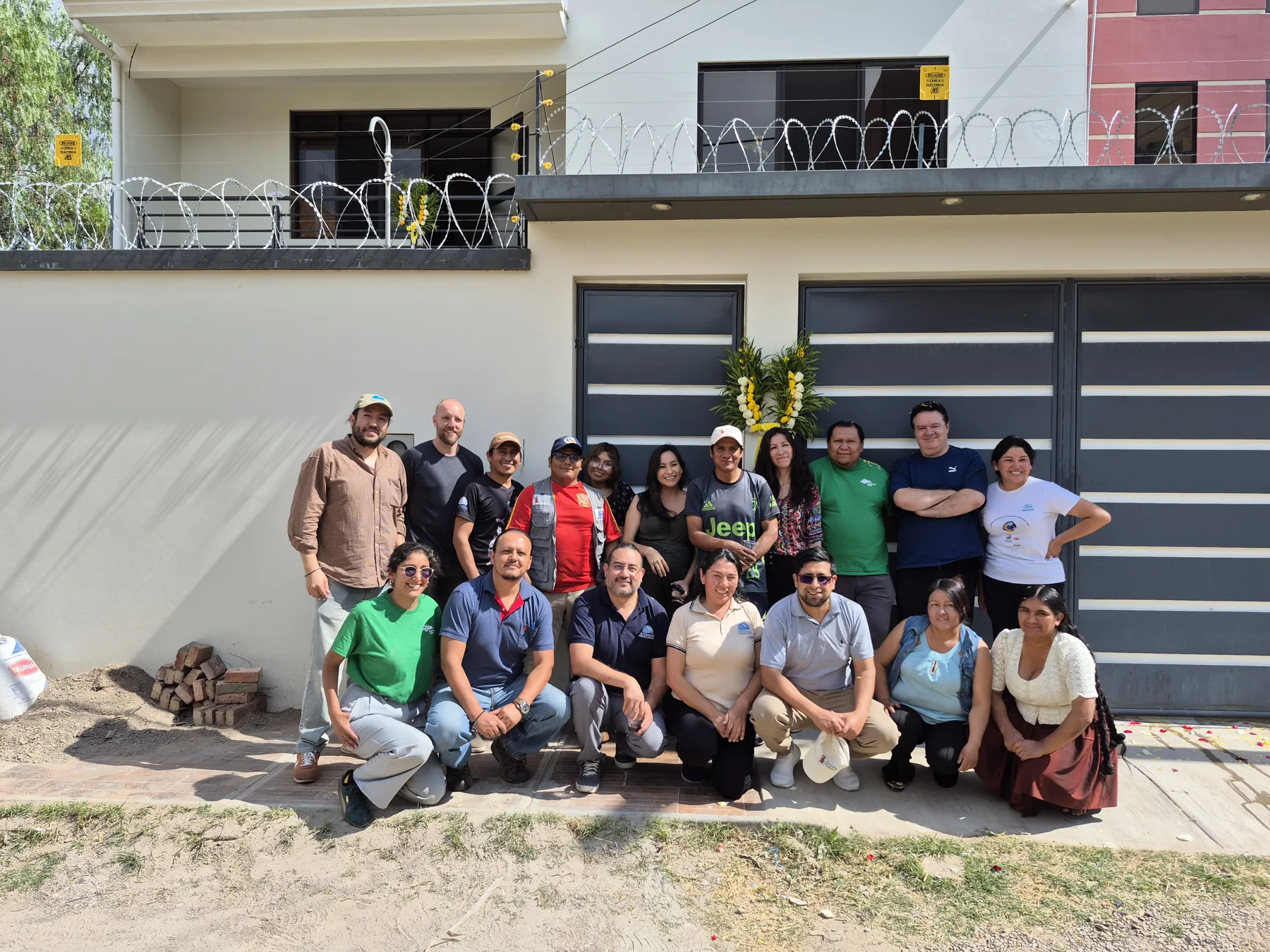
More than three decades after obtaining its legal status—and more than three decades since a small group of birdwatchers began envisioning an organization dedicated to protecting Bolivia’s avifauna—Armonía continues to pursue the same goal that inspired its founders: preventing the extinction of Bolivia’s most threatened birds.

Escrito por Armonia
Celebrando los 30 años en la conservacion.