

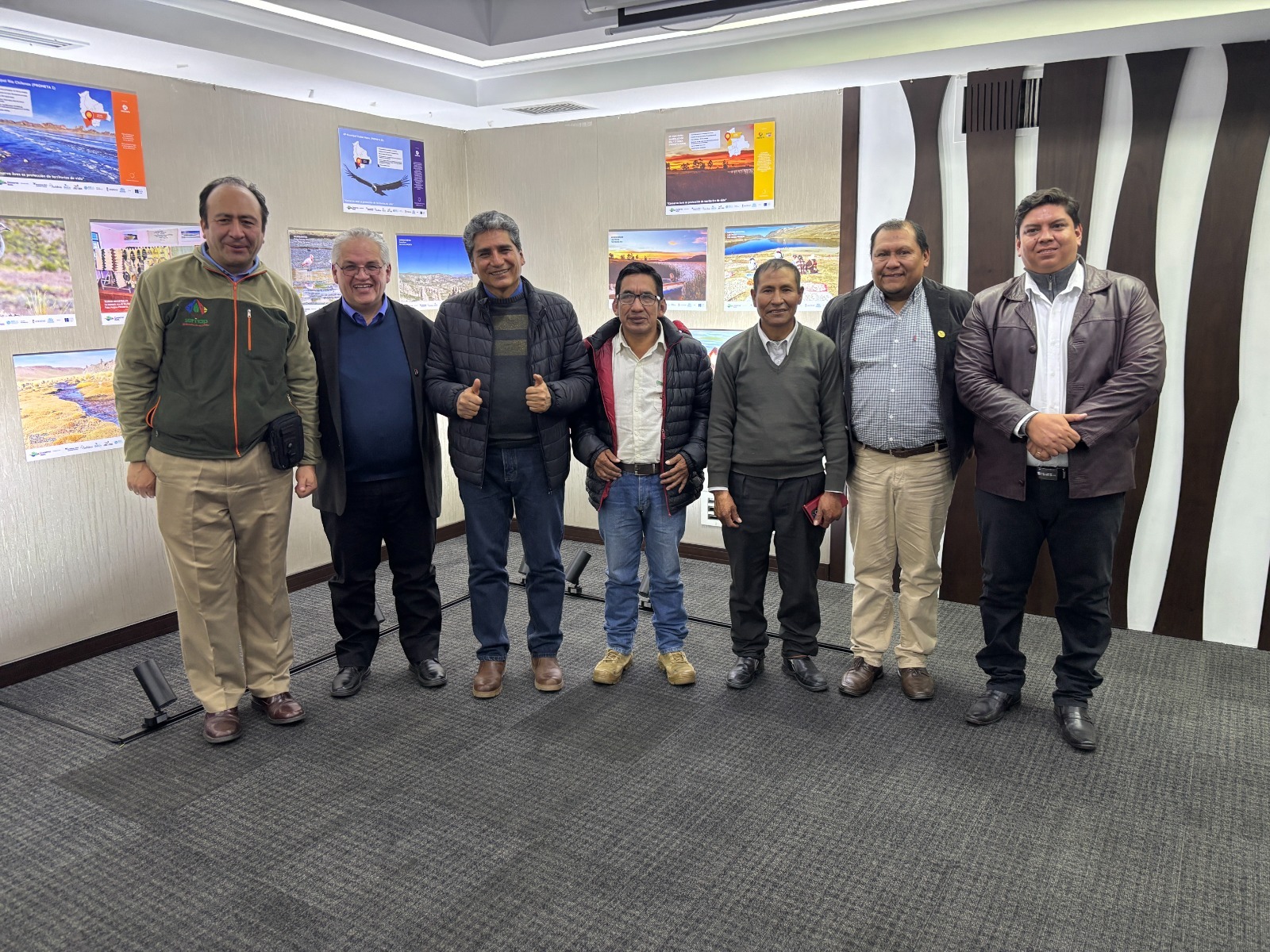
Nine projects, five partners, and joint efforts with municipal governments and local communities have driven the creation and consolidation of subnational protected areas across five departments of Bolivia. The goal now is to move closer to one million hectares while strengthening the management of these territories.
The Conserva Aves 2023–2026 initiative has concluded its implementation phase in Bolivia, with more than 700,000 hectares declared as subnational protected areas and the prospect of approaching one million hectares in the coming months. This achievement is the result of work carried out alongside key partners, municipal governments, and Indigenous and peasant communities in different parts of the country. The announcement was made during the initiative’s closing event, held on August 21 at the Aurum Hall of the Stannum Boutique Hotel in La Paz.
“Just a few days ago, we had a little over 450,000 hectares, and now we have the good news that this figure has increased. The number changed very recently: one of the projects led by Faunagua in the Iténez region has been completed and is now legally established. As a result, the total area of declared protected areas has surpassed 700,000 hectares. With the projects that are still to be completed in the remaining months, we will reach nearly one million hectares,” explained Rodrigo Soria, Director of Asociación Armonía, at the opening of the closing event.
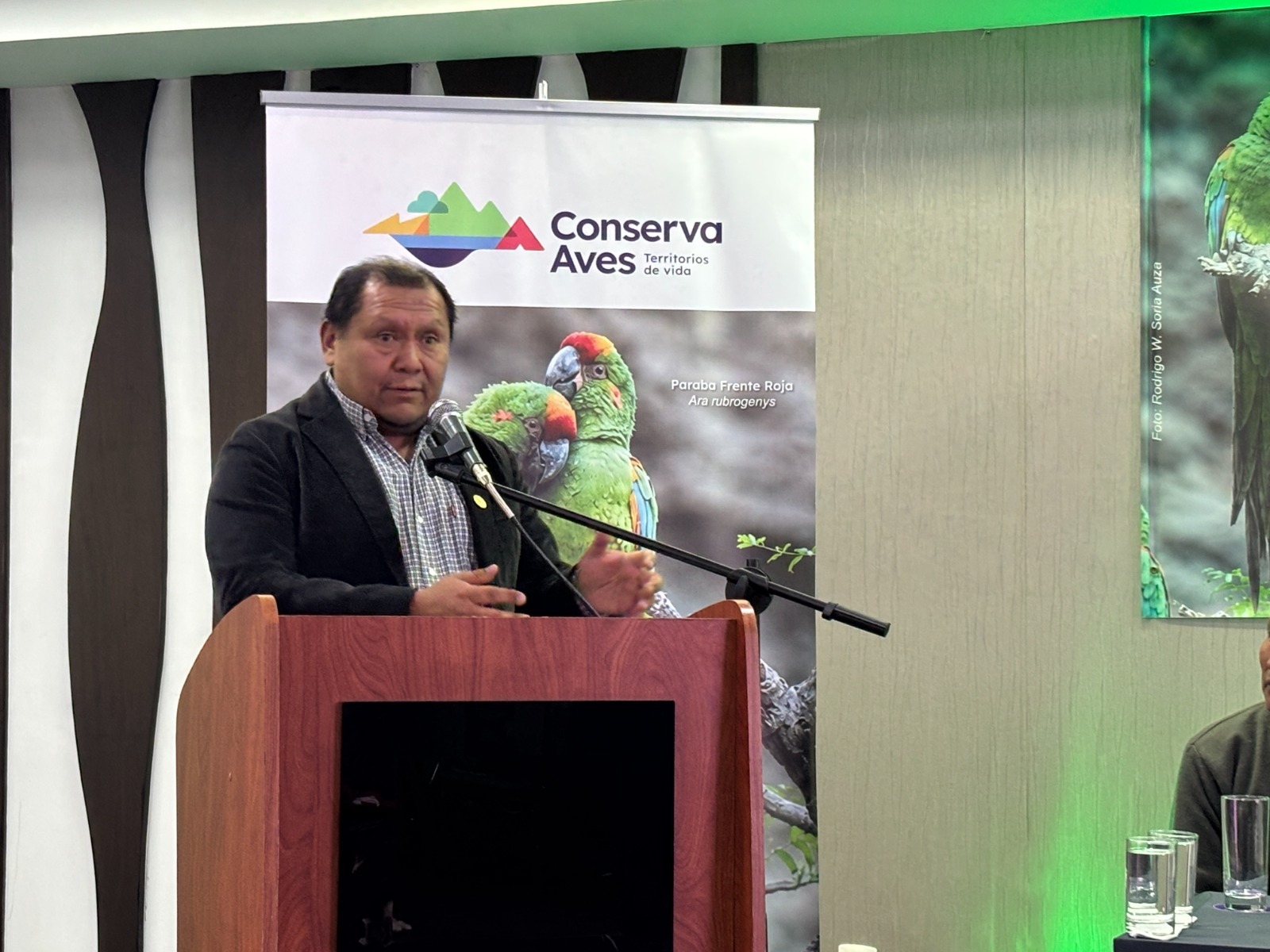
Photo: Armonía Director Rodrigo Soria Auza opened the Conserva Aves 2023–2026 closing event.
The initiative, implemented in Bolivia by Asociación Armonía and the Foundation for the Development of the National System of Protected Areas (FUNDESNAP), was made possible through support from American Bird Conservancy, National Audubon Society, BirdLife International, Birds Canada, and the Latin American and Caribbean Network of Environmental Funds (RedLAC).
These organizations provided funding for the implementation of projects in biodiversity-priority areas, with the support of 20 local government partners, including municipalities and the Autonomous Indigenous Government of the Multiethnic Indigenous Territory (TIM).
The Conserva Aves closing event, held under the theme “Territories that Embrace Life,” brought together Rodrigo Soria Auza, Executive Director of Armonía; Sergio Eguino, Executive Director of FUNDESNAP; Omar Rocha, Executive Director of BIOTA; Rodrigo Ayala, Executive Director of PROMETA; Catalina Rivadeneira, ORE Project Coordinator; Severiano Matene, Indigenous leader of the TIM; and local authorities including Denis Villarroel, President of the San Matías Municipal Council, and Félix González, Mayor of Toro Toro. Also in attendance were César Altamirano, Director of Planning at SERNAP; Cecilia Vides, Regional Coordinator of Conserva Aves for RedLAC; and Alfonso Hernández, Regional Coordinator of the initiative for BirdLife International. The gathering provided an opportunity to share progress and recognize the collaborative efforts to strengthen the conservation of birds, biodiversity, and the territories that sustain them.
What is Conserva Aves?
Conserva Aves is a regional conservation initiative focused on securing the long-term protection of birds, biodiversity, and ecosystem functions through the creation and consolidation of subnational protected areas. Its goal is to contribute to the protection of at least two million hectares across nine Latin American countries, with an initial investment of $12 million from the Bezos Earth Fund for activities in Bolivia, Colombia, Ecuador, and Peru. In Bolivia, Armonía and FUNDESNAP work alongside local organizations, municipal governments, and communities to establish protected areas in territories that are priorities for threatened, endemic, and migratory bird species.
In Bolivia, Conserva Aves implemented nine projects in Beni, Potosí, La Paz, Oruro, and Santa Cruz, through a proposal-selection process based on the Conserva Aves Initiative’s prioritization criteria for areas important for bird and habitat conservation. These priority areas were identified through analyses of the distribution and habitat use of target species. The projects seek to create or consolidate municipal and departmental protected areas, as well as protected areas within Indigenous territories, ecological corridors, and other conservation designations. This approach is based on the premise that protecting bird habitats helps conserve entire ecosystems. It is also particularly relevant for the more than 80 migratory bird species that cross Bolivia each year, connecting the country’s ecosystems with migration routes that extend across the continent.
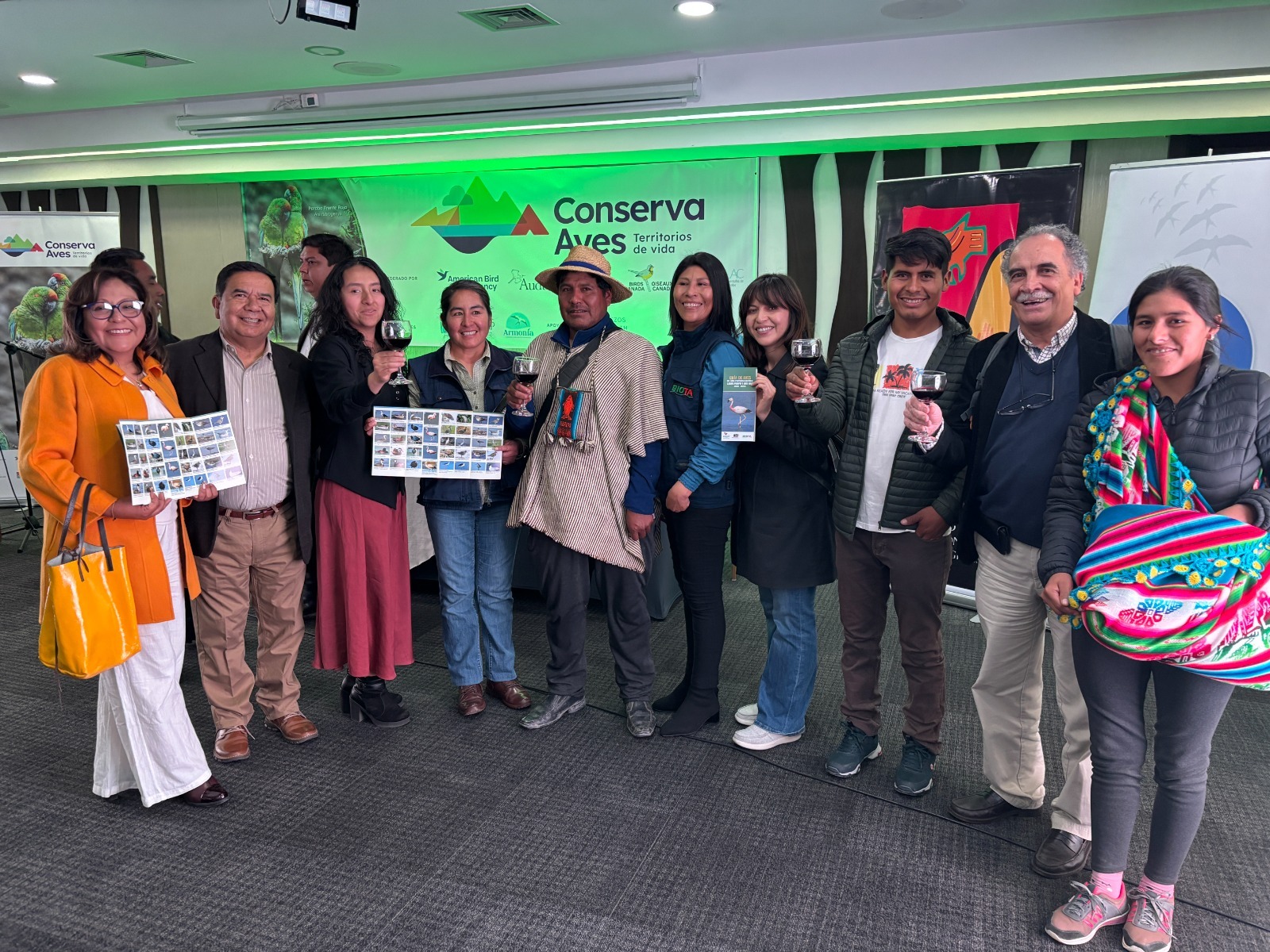
Photo: Conserva Aves works alongside communities to protect biodiversity.
From legal designation to sustainable management
The legal designation of a protected area is only the first step toward ensuring its long-term conservation. For this reason, Conserva Aves supported projects in the development and approval of management plans and financial sustainability strategies—tools that establish concrete actions, define responsibilities, and guide the long-term management of these territories. For Rodrigo Soria, this support is one of the initiative’s main distinguishing features compared with other conservation processes.
“In many cases, protected areas were declared and then nothing more happened. Conserva Aves makes a difference in this regard because it has not only encouraged each project to achieve the legal designation of protected areas—whether municipal, Indigenous, departmental, and so on—but also to develop and approve their corresponding management plans and financial sustainability strategies. These are very important tools to make the areas operational and to establish a clear direction for each local partner to follow,” Soria explained.
Soria also emphasized that the conclusion of this stage does not mean the end of the work. Armonía, FUNDESNAP, and their partners continue to explore mechanisms to sustain the processes that have been initiated. “Our efforts do not end here; we are continuing to work,” he said.
BIOTA’s work in two key territories
The results of Conserva Aves are also reflected in projects seeking to protect strategic sites for threatened and migratory species. One of these focuses on Lakes Poopó and Uru Uru in Oruro, a complex of high-Andean wetlands internationally recognized as a Ramsar Site that supports significant concentrations of flamingos and other waterbirds. The project, led by the Center for Studies in Theoretical and Applied Biology (BIOTA), aims to have the territory recognized as a national protected area covering approximately one million hectares, according to Omar Rocha, Executive Director of BIOTA.
“These environments regularly host 50,000 flamingos of the three species. We have conducted monthly monitoring, and there is an extraordinary figure: in June 2005, we counted 250,000 individuals from Panza Island. This means that this site, this wetland, is strategic for the conservation of waterbirds, especially the three species of high-Andean flamingos,” he explained.
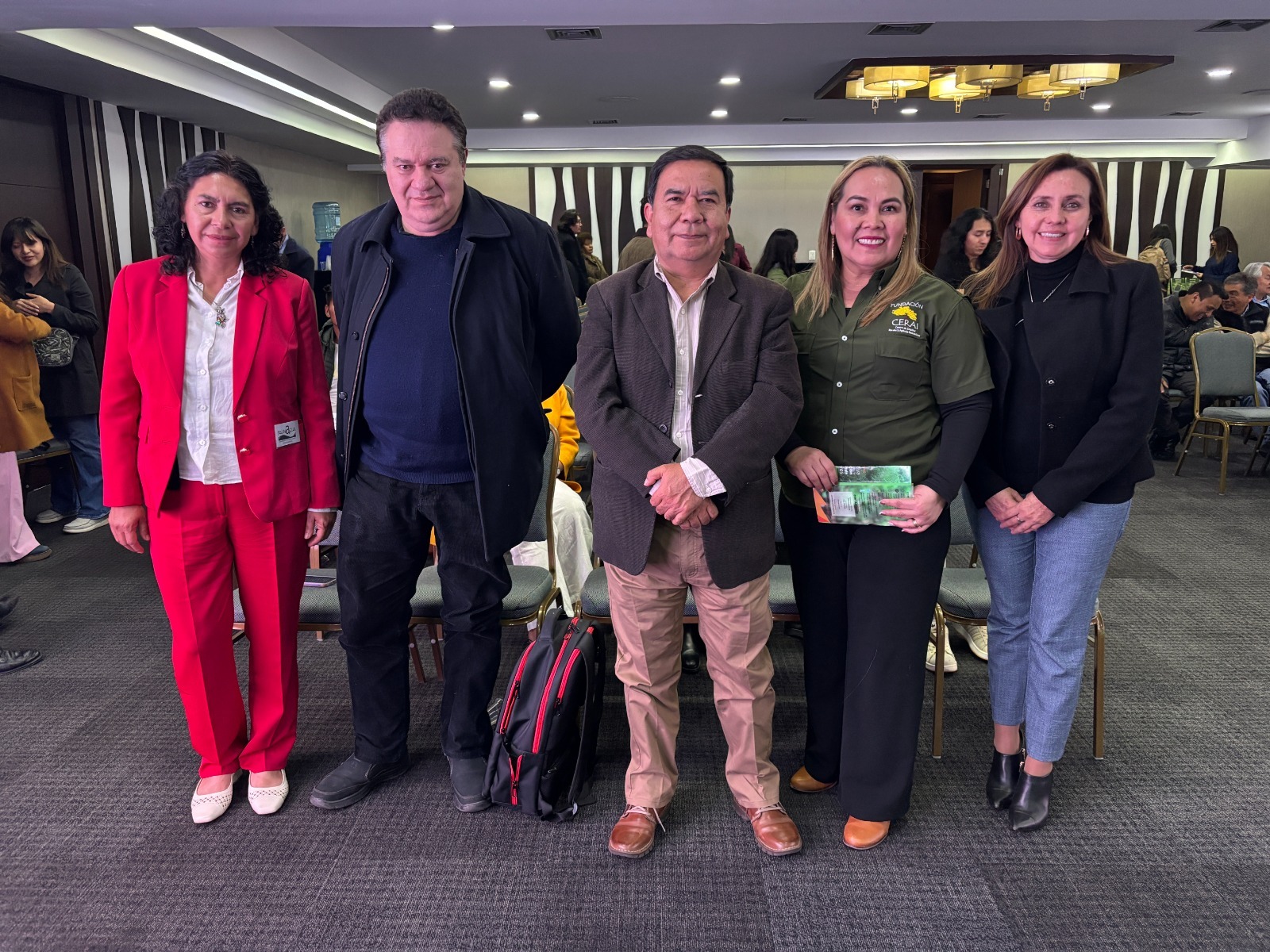
Photo: Omar Rocha, Executive Director of BIOTA (center), with Rosmery Ayala, Director of Faunagua; Rodrigo Ayala, Executive Director of PROMETA; Ruth Añez, Administration Director at CERAI; and Catalina Rivadeneira, ORE Project Coordinator.
BIOTA’s second project is located in the Cuñurani subcentral, in the municipality of Toro Toro, Potosí, where work is underway to establish a municipal reserve covering approximately 10,000 hectares. The area encompasses four communities and protects the Jala Jala Canyon, identified as a key site for the Red-fronted Macaw, a species classified as Critically Endangered.
“Based on the monitoring we conducted over a full annual cycle, including reproductive monitoring, we determined that this site, this protected area, is home to 12% of the global population of the Red-fronted Macaw,” Rocha said.
Conservation from Indigenous territories
In the Multiethnic Indigenous Territory (TIM), in the department of Beni, conservation is also closely linked to territorial protection and the self-governance of the Indigenous peoples who live there. Covering nearly 600,000 hectares and home to more than 4,000 people, the TIM comprises five Indigenous peoples: Moxeño Ignaciano, Moxeño Trinitario, Yuracaré, Chimán, and Movima. In this territory, the process promoted by Conserva Aves was coordinated with community efforts to protect their forests, water sources, and biodiversity.
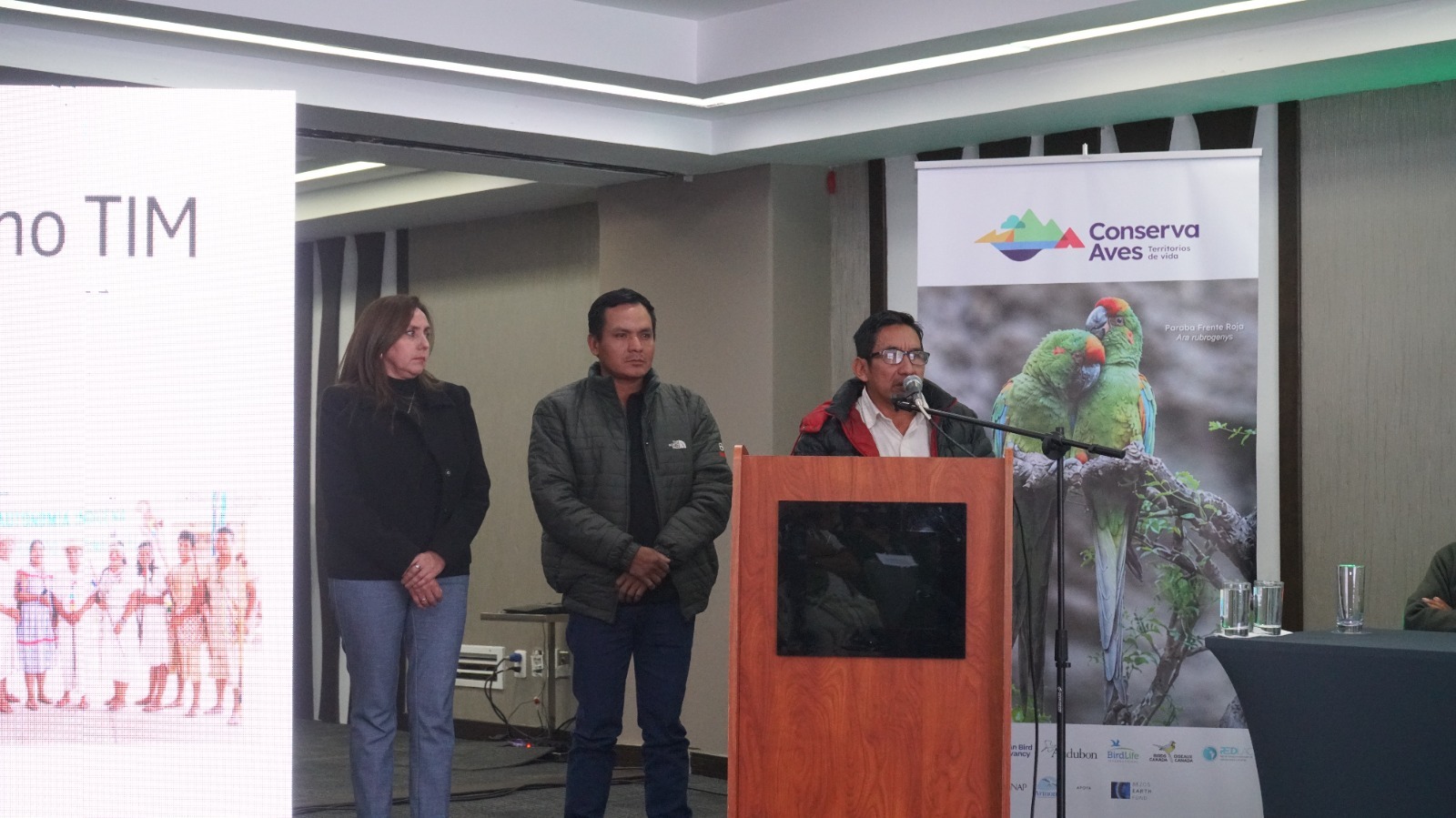
Photo: Severiano Matene, Indigenous leader of the TIM, speaks during the closing event of Conserva Aves in Bolivia. Photo: Nelson Fernández, FUNDESNAP.
“We, as a government, have recognized the need to protect the headwaters of our rivers. Most of the Indigenous communities that make up the Multiethnic Indigenous Territory are located along the rivers. That is why we created the Loma Santa Conservation Area, because we understand the importance of protecting our territory, our forests, all of our biodiversity, and especially water, since it is the foundation of life for Indigenous territories and the communities that live in the TIM,” explained Severiano Matene, an Indigenous leader of the territory.
For Matene, conservation also represents a way to protect the different cultures that coexist within the TIM. “By doing so, we would also be protecting the way of life of the five Indigenous peoples,” he said.
Serranía de Sunsas Municipal Wildlife Reserve
A significant conservation achievement is the creation of the Serranía de Sunsas Municipal Wildlife Reserve, encompassing 86,905.01 hectares under conservation. This initiative seeks to protect one of the areas of greatest natural value within the municipality of San Matías and contribute to safeguarding the Chiquitano Dry Forest and the ecosystems transitioning toward the Pantanal.
The process has progressed beyond the reserve’s official designation, with the development of its Management Plan and Financial Strategic Plan (FSP), biodiversity monitoring activities—particularly of bird species—and the consolidation of participation and governance mechanisms through an established Management Committee.
As part of this process, the Bare-faced Curassow (Crax fasciolata) has been identified as an emblematic species, becoming a symbol of the natural wealth that the reserve seeks to conserve and of the need to strengthen the sustainable management of this important natural heritage of the municipality. The project was implemented within the framework of the Conserva Aves Initiative, with the CERAI Foundation as the local partner, and involved local authorities and Indigenous communities in the territory, while also receiving support from The Pew Charitable Trusts.
“Let’s make our dreams take flight”
With the creation and consolidation of new protected areas, the challenge now is to strengthen their management and ensure their long-term sustainability. From the perspective of Sergio Eguino, Executive Director of FUNDESNAP, the conclusion of Conserva Aves does not represent the end of the journey, but rather an opportunity to set new goals, expand conservation efforts, and improve the effectiveness of managing areas that already have legitimacy within their territories.
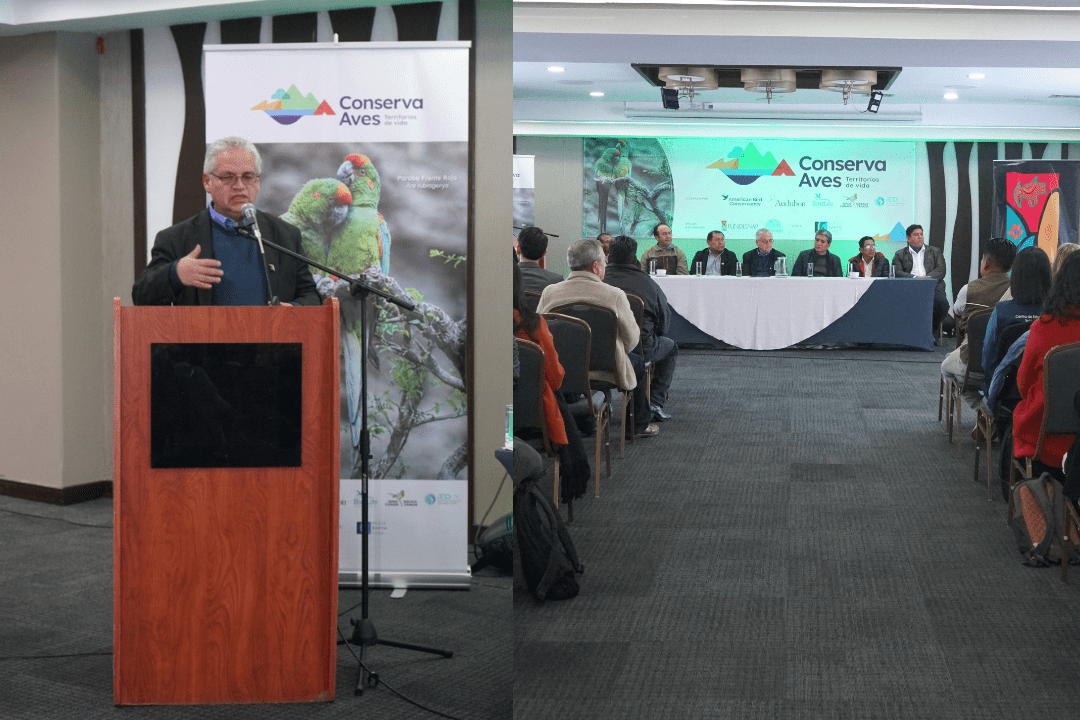
Photo: Sergio Eguino, Executive Director of FUNDESNAP. Photo: Nelson Fernández, FUNDESNAP.
“Let’s make our dreams take flight. Conserva Aves was initially a dream three years ago, and we have made it a reality. That has brought us to this moment, when we now need to dream beyond this—with other areas, with improving management effectiveness, and with finding ways to make these areas sustainable. They already have legitimacy. So I believe this is a major achievement,” said Eguino.
Meanwhile, Cecilia Vides, Regional Coordinator of the Conserva Aves initiative for RedLAC, and Alfonso Hernández, Regional Coordinator of the initiative for BirdLife International, agreed that the progress achieved in Bolivia should mark the beginning of a new phase of work. Vides highlighted the commitment of the organizations and teams that supported processes in the territories and called for continued efforts to strengthen conservation. Hernández emphasized the role of communities in protecting these areas and the collaborative work that made progress possible over the past years.
“Bolivia has so much more to offer, so we hope not to let go of this country, but to continue the work we are doing,” Vides said. Hernández, for his part, stressed that “this is not the end of Conserva Aves” and that these territories still need “much more support, continuity, management, and partners willing to continue walking this path together.”
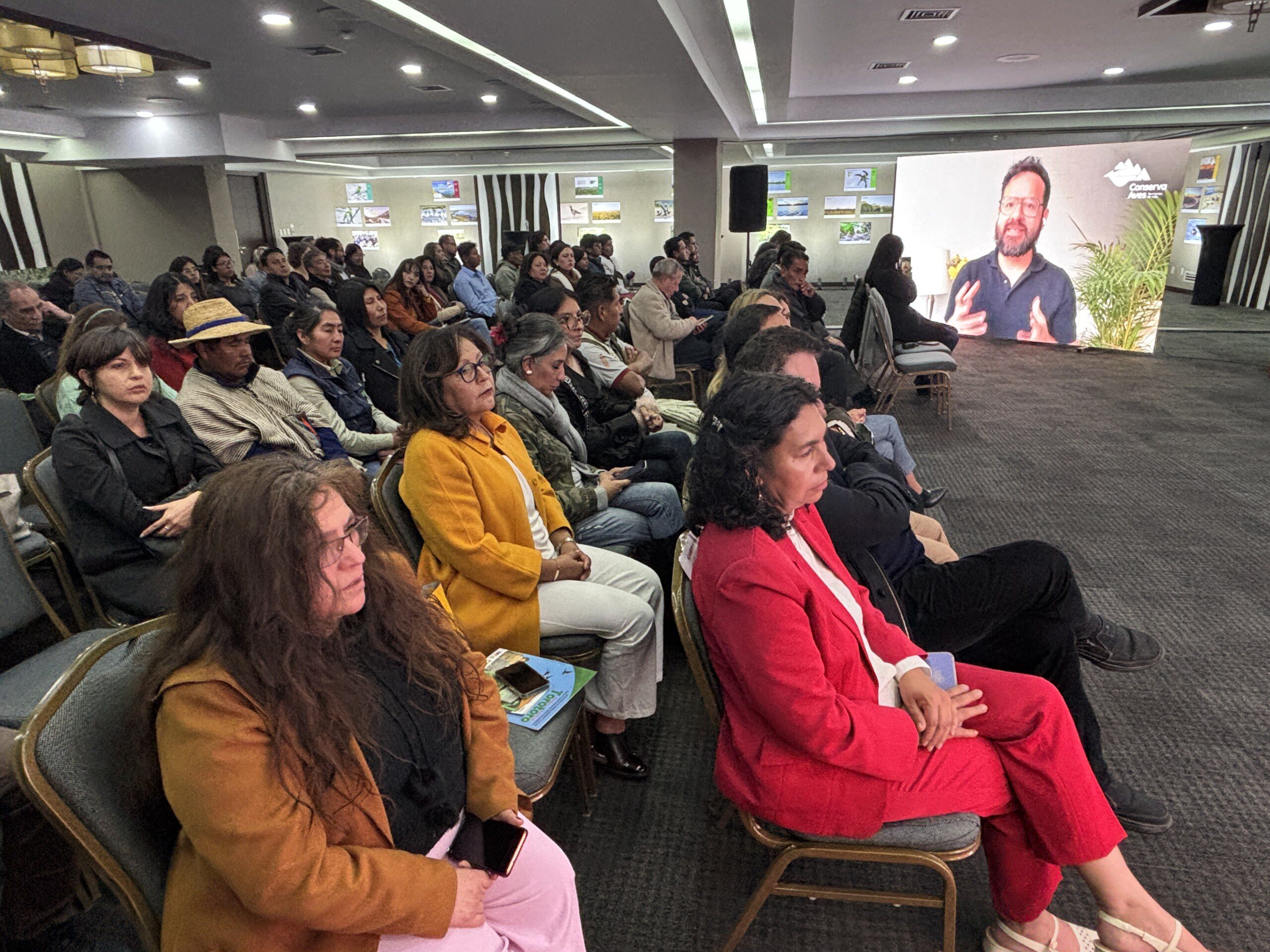
Photo: Cecilia Vides, Regional Coordinator of the Conserva Aves Initiative for RedLAC, and Alfonso Hernández, Regional Coordinator of the initiative for BirdLife International, joined the closing ceremony through video messages, highlighting the progress made in Bolivia and the importance of ensuring the continuity of conservation efforts.
Text: Nicole Laura, Armonía.
Photos: Margarita Palacios, Armonía.