


On the southern hillside of Tunari National Park, where the sun illuminates thousands of small plants waiting to become forest, a woman works with patience and conviction. Pascuala Nogales, a mother and Quechua community member from Tholapujru, is in charge of production at the community nursery of District 3 in the municipality of Tiquipaya, Cochabamba. From there, together with a group of women, she leads an initiative that this year is producing 60,000 seedlings of native species to restore the high-Andean forests.
“I am a single mother, so above all I work for them (my children). I’ve always been responsible; I’ve been a community leader,” says Pascuala, as she carefully checks the trays of kewiña seedlings growing under her attentive gaze.
“At first I hesitated a bit—it was a lot of responsibility—but the people from Armonía trained me, and now I know how to manage on my own, and I’m proud of my plants.”
The community nursery operates under the management of a board made up of representatives from nine communities, with technical support from the Asociación Armonía through the Tunari Program. This nursery has become a model of local management and sustainability.
Each species has a purpose. Native plants such as kewiña, kiswara, lloque, and alder not only restore the landscape, but also recover ecosystem functions that protect water sources, improve soils, and provide habitat for unique species such as the Cochabamba Brush Finch, an endemic bird that lives in kewiña forests.
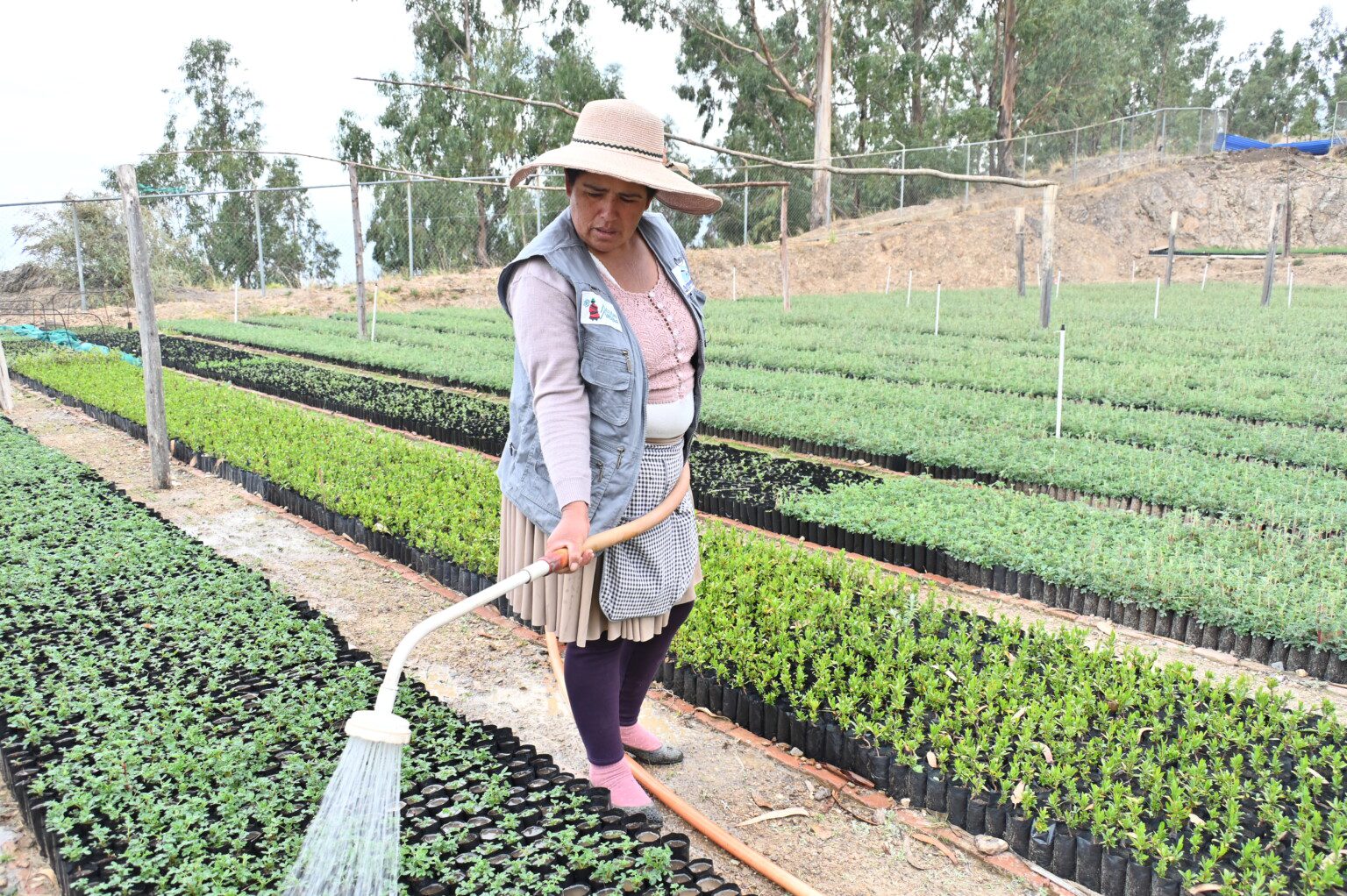
Pascuala learned that planting trees is also planting the future
“With my companions we went out to rescue saplings (young plants or shoots that grow from seeds), we did pricking out (transplanting), and learned new ways of planting. Each little plant was like one more child; they needed water, weeding—just like a child. I feel at peace here, because I know I’m contributing to the growth of our community and our forests,” she says.
Her work has also inspired her family. Her daughter describes it with affection.
“I feel very proud of my mom. She teaches us how hard life is, but also how to move forward. With this, she not only helps the communities, she also takes care of the forest and the water for everyone.”
For Omar Oporto, coordinator of the Tunari Program, the community nursery is an experience that strengthens local autonomy.
“They already manage the nursery, produce their plants, and pay their nursery worker. We support them with technical training. The goal is that in the future they will be able to operate autonomously and diversify their production toward agroforestry species,” he explains.
The effort of Pascuala and her community shows how forest restoration also translates into social strengthening. Women who previously devoted themselves only to agricultural cultivation now combine that work with the production of native species, contributing to the recovery of Tunari National Park.
The Tunari Program, promoted by Asociación Armonía, marks five years of work in restoring the park’s native forests, one of the most important protected areas in Bolivia. These actions are possible thanks to the support of Acción Andina, the Flemish Fund for Tropical Forests (FFBT), BOS+, Trillion Trees, BirdLife International, and the Darwin Initiative.
Article written by Marizol Huarachi, published in Opinión
Photos: Romeo Rojas, Armonía