


Since 2020, Asociación Armonía’s Tunari Program has been working with local communities, municipal governments, the departmental government, the National Service for Protected Areas through the Tunari National Park Authority (SERNAP–PNT), and partner institutions in Cochabamba to restore native forests and protect watersheds on the southern slope of Tunari National Park.
Between 2023 and 2025, these efforts were strengthened through the project “Protecting ecosystem functions in key micro-watersheds for biodiversity and people: Southern slope of Tunari National Park”, funded by “Vlaams Fonds voor Tropisch Bos” (FFBT).
Over this period, the program achieved six key milestones that highlight the value of long-term, integrated conservation approaches based on community participation, inter-institutional collaboration, and ecosystem restoration.
1. Managing exotic plantations to reduce fire risk

Large pine and eucalyptus plantations on the southern slope of Tunari National Park date back to reforestation policies implemented between 1962 and 1991. While these plantations were originally established to prevent soil erosion and flooding, their long-term impacts on native ecosystems, biodiversity, water cycles, and fire behavior were not fully considered.
Decades of limited management have turned these plantations into major sources of fuel, increasing wildfire risk and displacing native vegetation. In response, between 2024 and 2025, Asociación Armonía worked with SERNAP–Tunari National Park and allied institutions—including the Forestry School and the NGO Árboles y Futuro—to develop a national protocol for the management of exotic forest plantations in protected areas. The protocol aims to reduce wildfire risk, promote native forest restoration, and improve living conditions for local communities.
2. Communities at the forefront of wildfire response
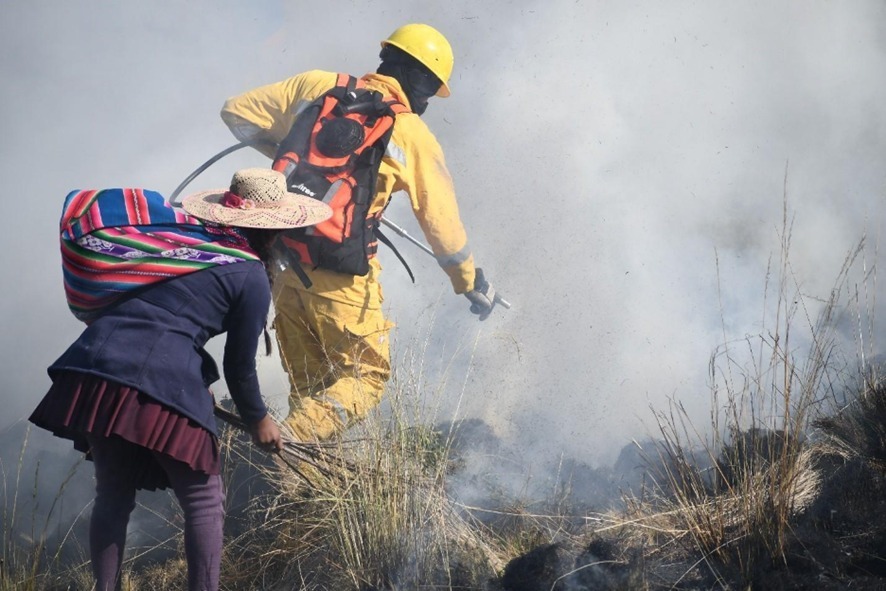
Wildfires are one of the most serious threats to native forests on the southern slope of Tunari National Park. In this context, local communities have become the first line of response.
After an initial basic training in wildfire control in 2022, the program expanded in 2023 into an integrated wildfire management approach focused on both prevention and response. This included the formation and certification of community brigades, the provision of equipment, specialized training, the development of intercultural response protocols, and the integration of community brigades into municipal and departmental emergency systems.
By 2024, seven community brigades had been established in the municipalities of Tiquipaya, Sacaba, and Quillacollo, training 91 community firefighters. A large-scale fire drill in the community of La Phia (Tiquipaya) tested local emergency response protocols and strengthened coordination. This experience was documented in the short film Firefighters of the Tunari Mountain Range.
3. Implementation of Agroforestry Systems in the municipalities of Vinto, Quillacollo, and Tiquipaya
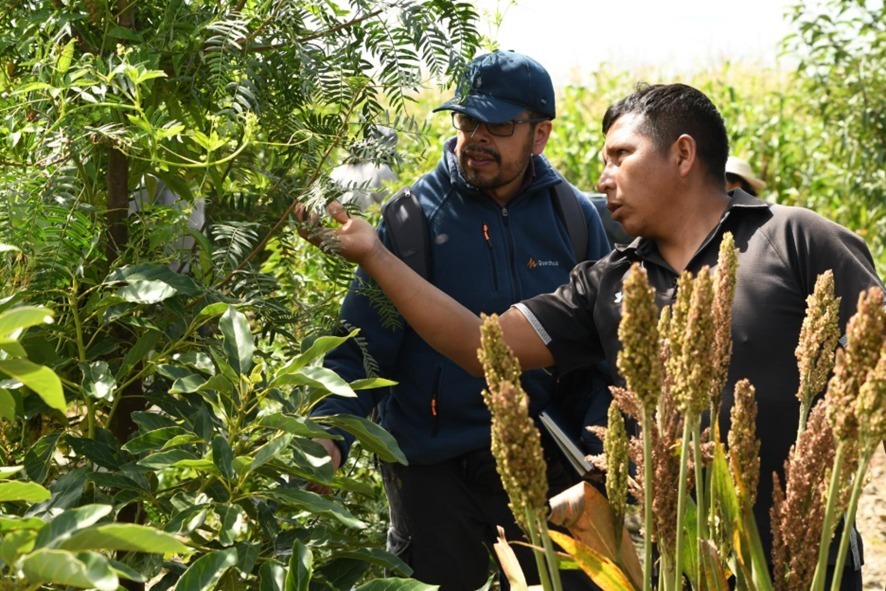
Agroforestry systems—combining native trees with fruit trees and crops—have become a key strategy to restore degraded landscapes while supporting local communities.
Since 2022, Asociación Armonía has worked in partnership with the NGO Agrecol to promote agricultural diversification and establish agroforestry plots in communities within Tunari National Park. In 2024 alone, with support from FFBT, 50 families benefited from the establishment of 31 new agroforestry plots and continued technical support for 19 previously established plots across five communities in the municipalities of Vinto, Quillacollo, and Tiquipaya.
4. Community-led planning for sustainable development

Participatory planning has been another cornerstone of the program. Local sustainable development strategies allow communities to define priorities, protect natural resources, and improve quality of life, while aligning their proposals with municipal planning and protected area management.
In 2023, five communities in District 3 of Tiquipaya developed the first local strategy focused on native forest and watershed protection. With support from FFBT, this approach was expanded in 2025 to the communities of Aguada (Vinto) and Chocaya (Quillacollo). Today, eight communities within Tunari National Park have territorial strategies that address water protection, wildfire prevention, and environmentally sustainable income-generating activities.
5. Proposal for an environmental and social financial sustainability mechanism to protect ecosystem functions on the southern slope of Tunari National Park
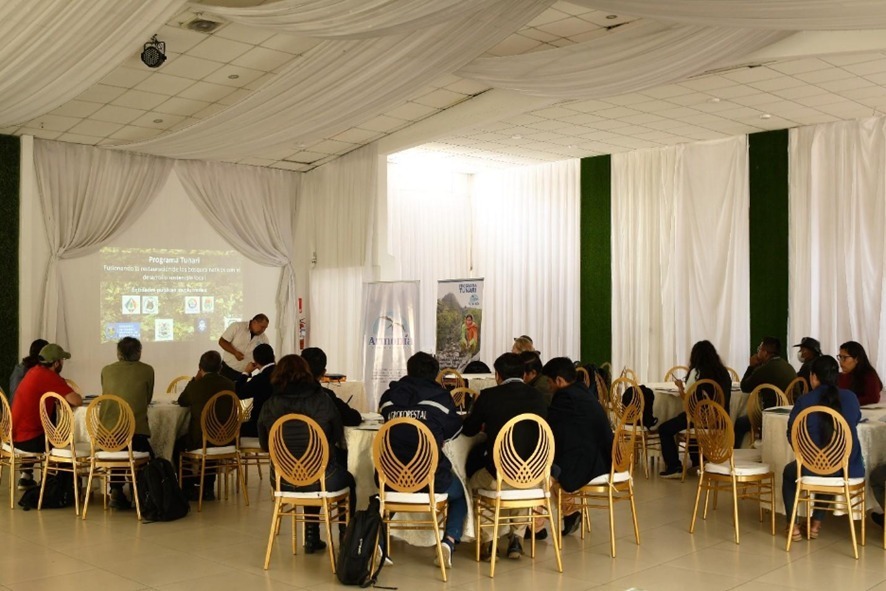
Protecting the ecosystem services provided by the southern slope of Tunari National Park—especially water for the metropolitan area of Cochabamba—requires the involvement of public institutions, private actors, and urban citizens.
Since 2024, Asociación Armonía has been developing a proposal for a financial, environmental, and social sustainability mechanism to support long-term conservation of these ecosystem functions. The process includes socio-economic and legal assessments, as well as dialogue with public and private stakeholders from the six municipalities of the Cochabamba metropolitan region.
6. One million seedlings restored through collective action

Through strong inter-institutional coordination and sustained support from multiple funders since 2021, the Tunari Program reached a major milestone between 2024 and 2025: one million native seedlings restored, covering 437.31 hectares.
This achievement reflects several years of cumulative effort and has enabled the expansion of ecological monitoring plots and the inclusion of additional communities, reinforcing a shared, long-term commitment to restoring and protecting the forests of Tunari National Park.
Text and photos: Daniela Aguirre-Torres, Coordinator of the Tunari Program, Asociación Armonía.