


Cover photo: Courtesy of Louis Jammes. Ted Parker (right) with a group of birdwatchers on the Caparuch Plateau.
Asociación Armonía celebrates 30 years of work on August 12. After three decades—marked by milestones such as helping prevent the extinction of the Blue-throated Macaw in the Llanos de Moxos (Beni)—the organization reaffirms the purpose that has guided its work since its foundation: creating a balance between nature and people to conserve Bolivia’s most threatened bird species.
The initiative took shape in the early 1990s, led by Louis Jammes, a French pilot who lived in Bolivia for four decades, together with an enthusiastic group of Biology students from Universidad Autónoma Gabriel René Moreno (UAGRM) in Santa Cruz de la Sierra. Among them was Éricka Cuéllar, now a renowned Bolivian biologist and conservationist.
In January 1993, the team began its first activities to raise interest in birds and promote awareness of the country’s rich birdlife, at a time when environmentalism and environmental protection were only beginning to gain a place in public debate. After consolidating its first projects, the organization was formally granted legal status on August 12, 1996, as Asociación Civil Armonía, marking the beginning of its institutional history.
The Blue-throated Macaw: A Conservation Success Story
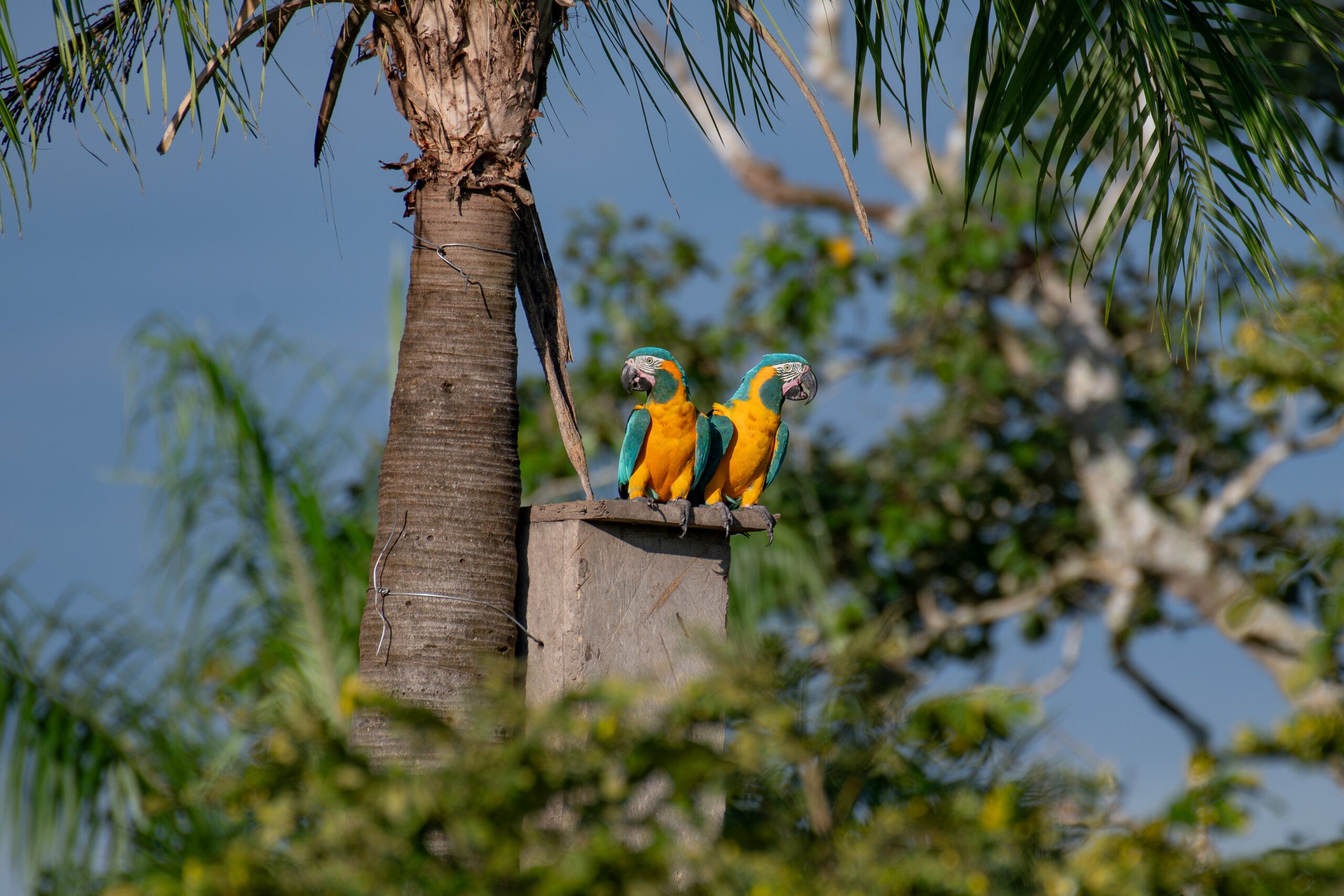
For the organization’s current Executive Director, Rodrigo W. Soria Auza, the greatest source of pride over these three decades is having achieved an exceptional milestone in global conservation: reversing the population decline of the Blue-throated Macaw (Ara glaucogularis), a species once on the brink of extinction.
“In the early 1980s, the Blue-throated Macaw was thought to be extinct. By the 1990s, only a very small number of individuals were known, and by the early 2000s, some institutions estimated that no more than 125 to 150 remained in the wild,” Soria explains.
However, after nearly 30 years of sustained efforts to protect habitat, install nest boxes, conduct scientific monitoring, and work with local communities, the results are clear. The 2015 census estimated that the population ranged from 315 to 450 individuals; ten years later, data from 2025 showed that the species had doubled its numbers, reaching nearly 800 individuals.
“This is an achievement that very few conservation organizations around the world manage to accomplish,” Soria emphasizes, adding that this same positive trend is being replicated with the Red-fronted Macaw (Ara rubrogenys), another of Bolivia’s emblematic and threatened species.
Conservation with a Human Face and Community-Based Management
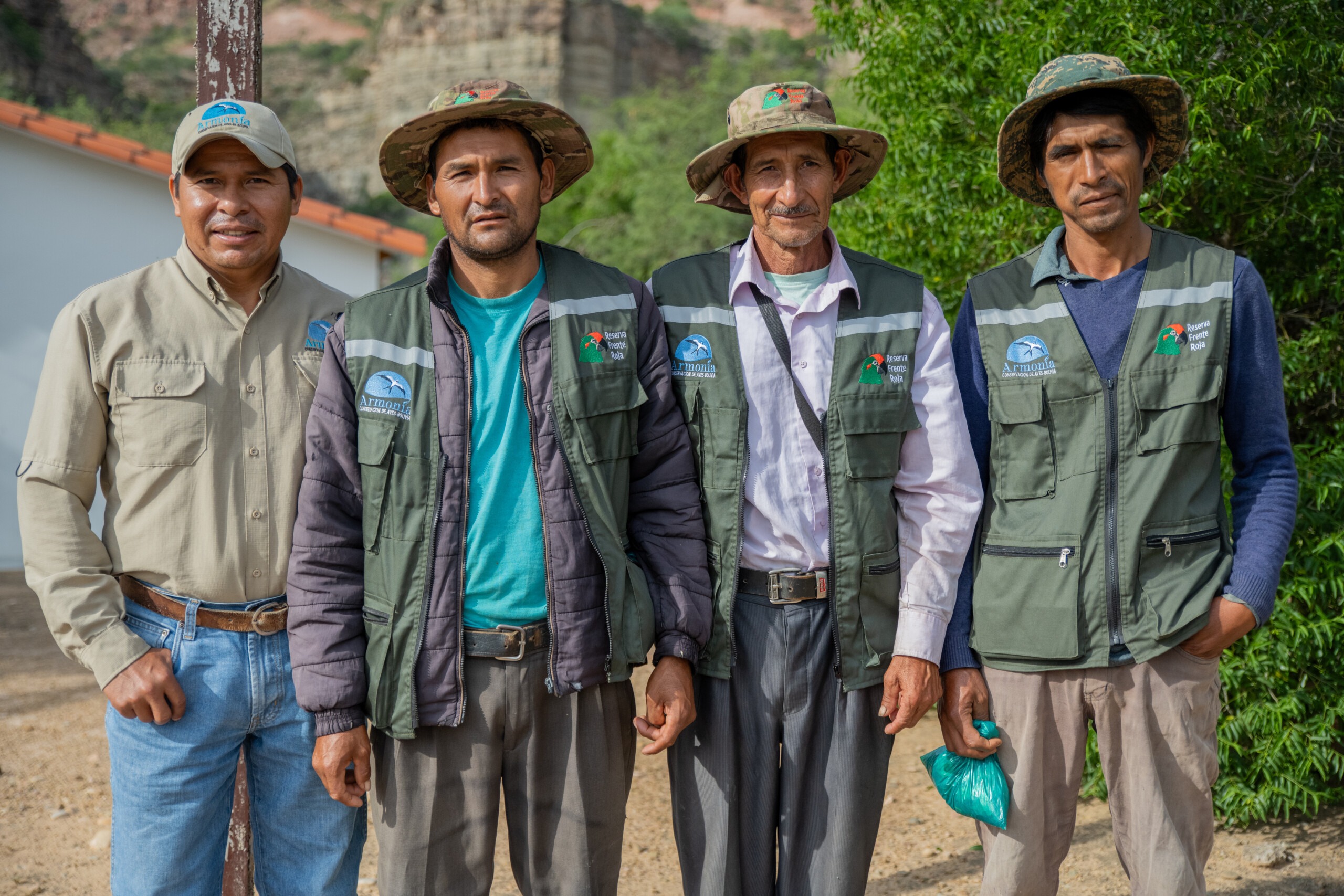
This impact would not have been possible without a paradigm shift in the relationship with local communities. For Iván Pérez Hurtado, Armonía’s Administrative Director, the key to the organization’s success lies in moving beyond traditional conservation models.
An emblematic example of this approach took place in 2005, when the organization promoted the creation of the 50-hectare Frente Roja Community Nature Reserve—the most important known nesting site for the species—and began working together with the communities of San Carlos, Perereta, and Amaya. Over the years, this process enabled the three communities not only to assume ownership of the reserve, but also to take direct responsibility for its management.
Rather than imposing restrictions, the approach focused on promoting community-based tourism and birdwatching, allowing local residents themselves to see the protection of the Red-fronted Macaw as a concrete opportunity for socioeconomic development and leadership.
“We do not come with a formula for protecting threatened species. First, we understand the communities, how they think, and what their needs are,” Pérez explains.
In his view, this approach is precisely what has distinguished Armonía throughout its history. While many conservation initiatives fail because they are conceived “from an ivory tower” and seek to be implemented without the genuine participation of local stakeholders, the organization strives to understand the social context and develop solutions together with local people.
“Armonía is an organization that believes people and nature can live in harmony. We can coexist with the environment without destroying it. People need to produce, they need to eat, they have economic goals and want to improve their quality of life, and that is fine; it is possible to build an economy based on respect for and protection of the environment,” Pérez explains.
Guided by this principle of putting itself in others’ shoes and working on the ground, Armonía decided to become a practical actor in the local socioeconomic landscape. To create a genuine balance, the organization directly manages a birdwatching tourism venture and practices cattle ranching in a setting where responsible livestock management on native grasslands makes ecological sense.
“The key is that we are not a theoretical NGO; we are a practical NGO. We have a presence on the ground, we work on the ground, we raise cattle. With producers and ranchers in Beni, the great thing is that they do not see us simply as a conservation organization talking about the ‘poor little birds’; they see us as ranchers. And when you are raising cattle, you speak a different language,” emphasizes Tjalle Boorsma, Armonía’s Director of Development and president of the Beni Eco-friendly Ranching Alliance, an initiative promoted by Armonía that brings together producers in the department of Beni to implement sustainable cattle ranching compatible with the protection of bird habitat.